

In Centuries in Every Course: Designing Impact That Lasts, I wrote about a meal at MIL—a restaurant 11,500 feet above sea level in the Peruvian Andes. Virgilio Martínez and Pía León built something here that honors centuries of Andean culture while creating economic opportunity for the communities around it. Eight courses. Eight ecosystems.
In my work on Designing Impact, I’ve been exploring what it takes to create something that lasts beyond you—work that others can own and carry forward. MIL is a case study. The local farmers and foragers now have markets that sustain their families. The techniques being documented are passing to the next generation. Impact that continues without the people who started it.
This visual companion is a way to celebrate their intention—by sharing the inspiring beauty and thoughtfulness of their craft.
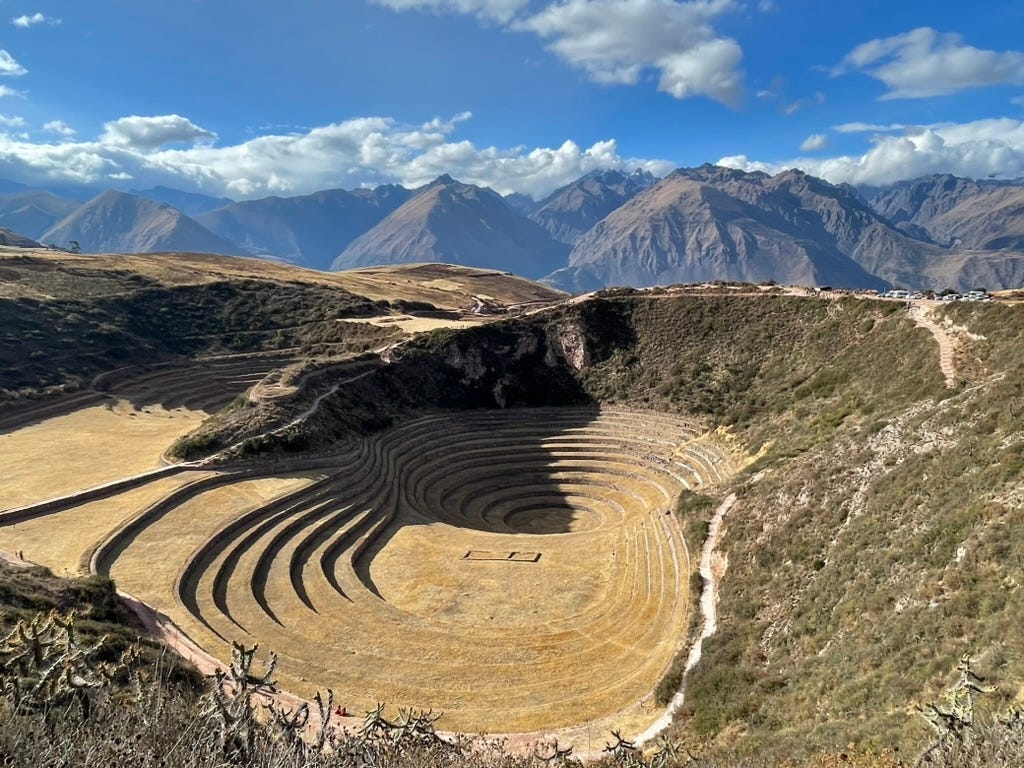
The Sacred Valley of the Incas—heart of an empire that once stretched from Colombia to Chile. MIL sits at the edge of Moray, an Inca archaeological site on the plateau above. A restaurant designed to continue what the Incas started.
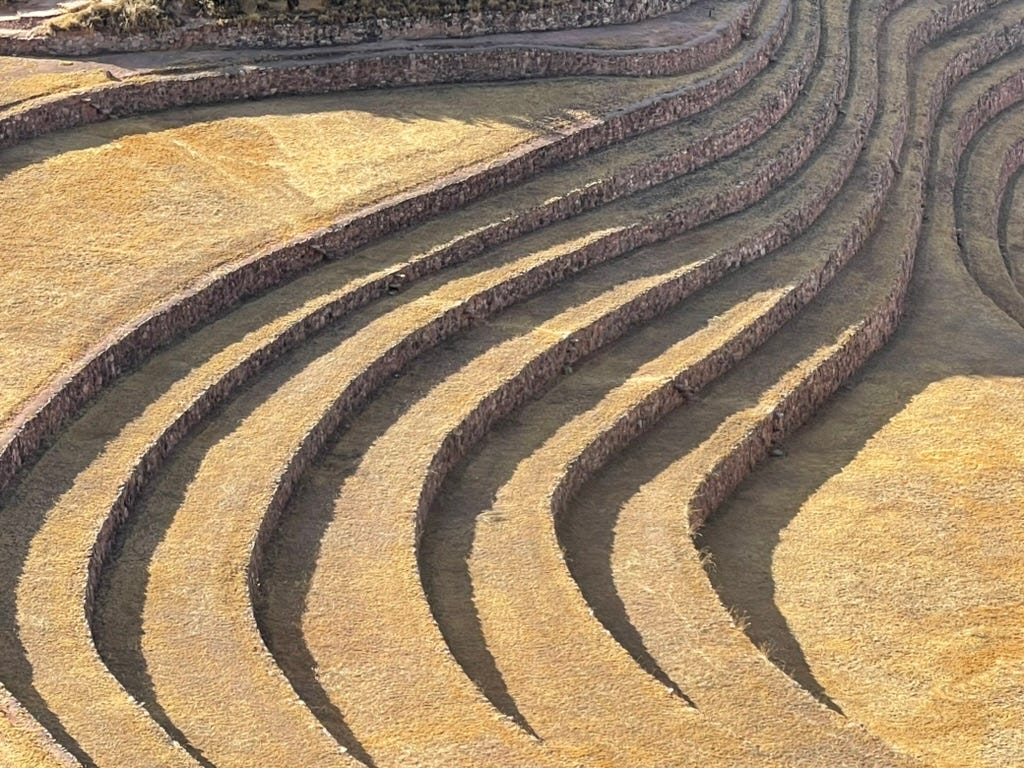
Concentric circular terraces carved into the earth five hundred years ago. An agricultural research station. The temperature difference between top and bottom reaches 27°F, creating twenty distinct microclimates to test which crops would thrive at different altitudes.
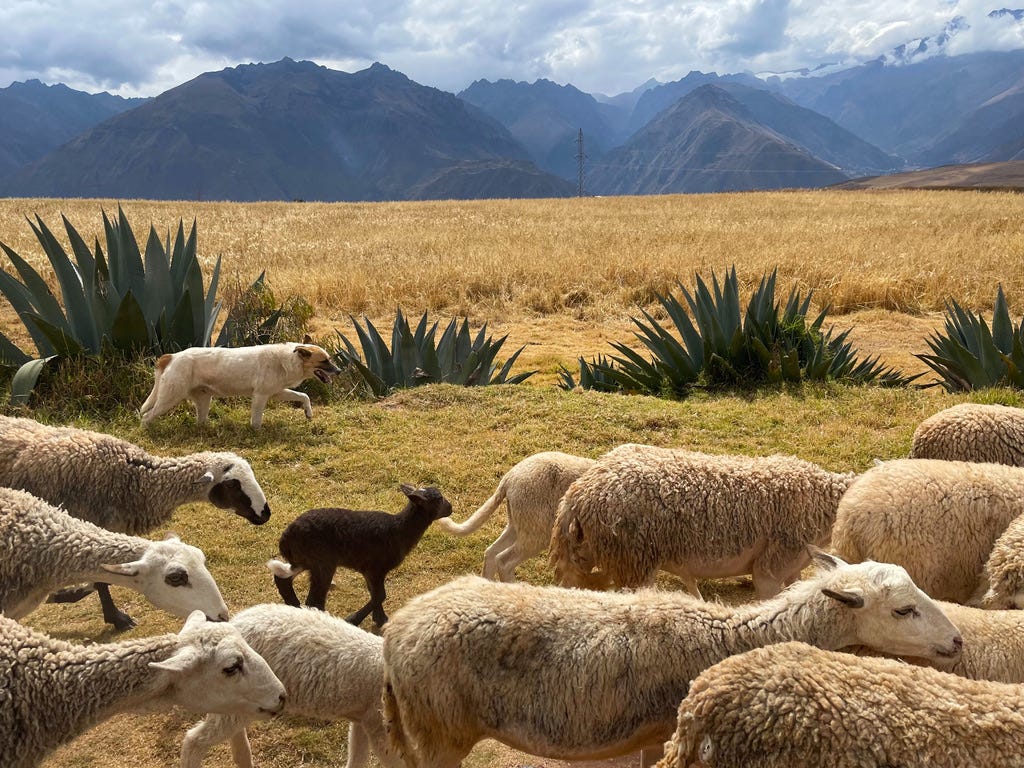
The road from Cusco climbs through high meadows for ninety minutes. Past shepherds and their flocks, the air thinning with each mile.
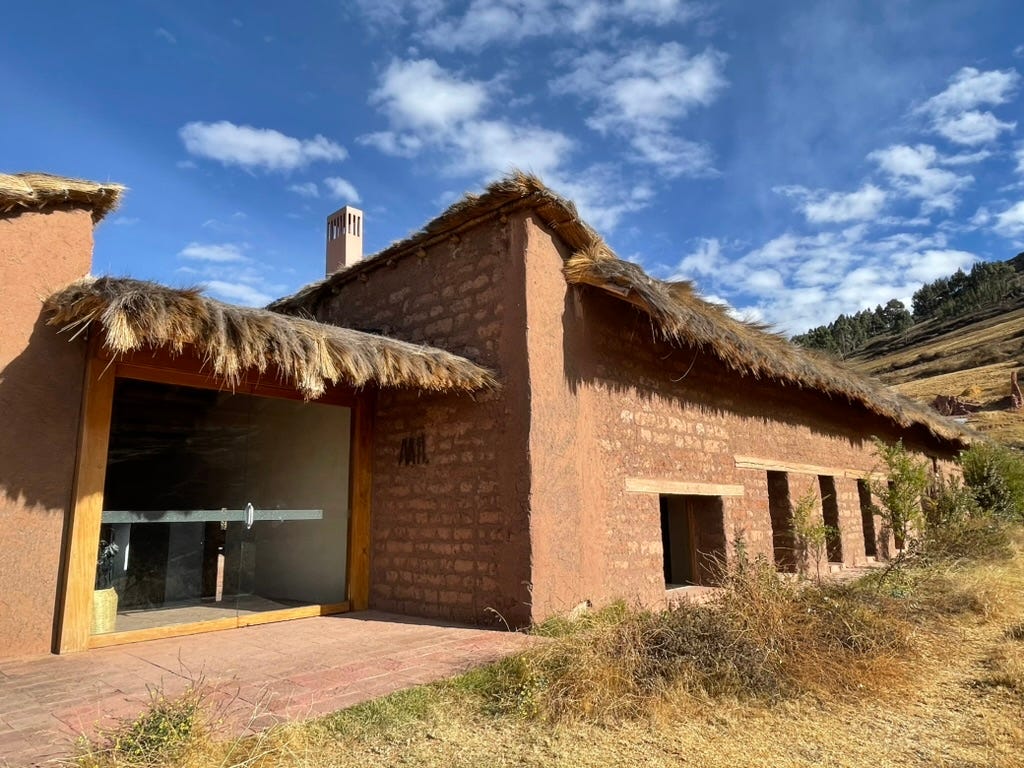
Adobe walls the color of the surrounding earth. Thatched roofs. MIL looks less like a restaurant and more like a geological formation
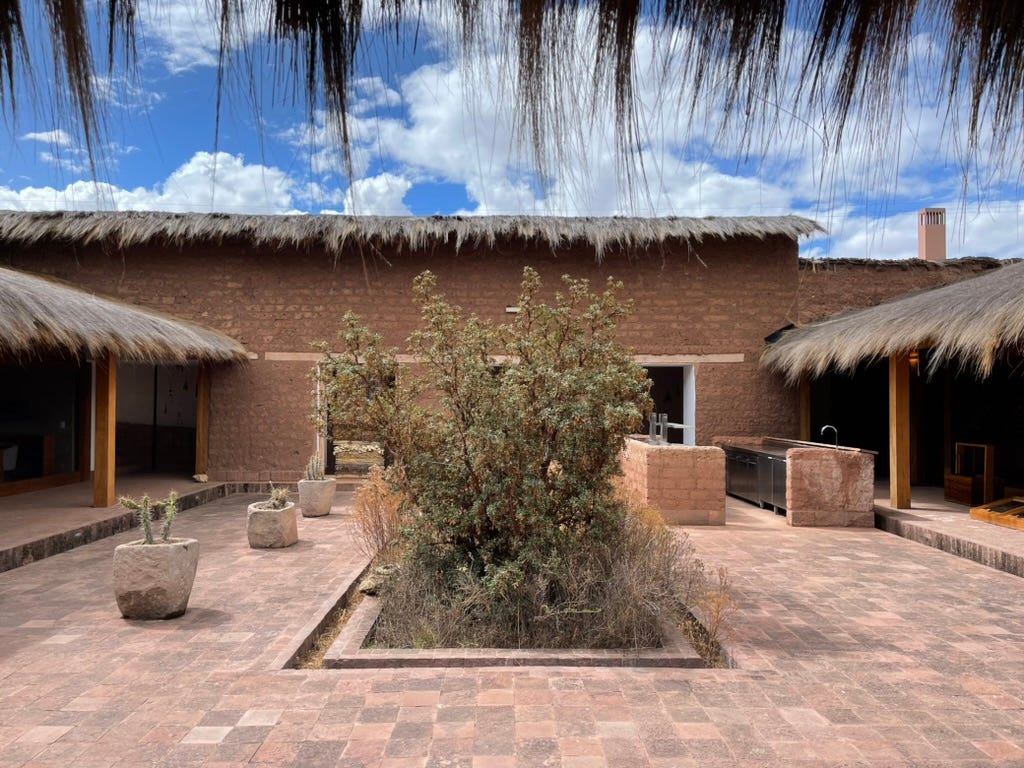
Quiet. Contemplative. An endangered queñua tree grows in the central courtyard. Pressed botanicals line the walls.
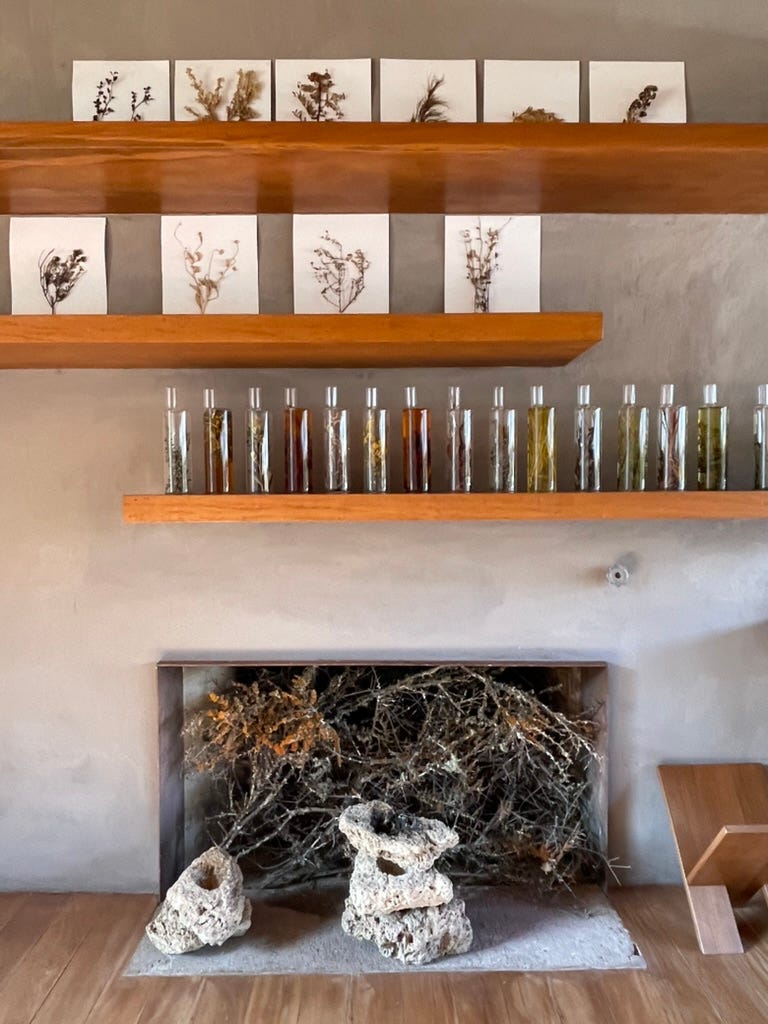
Inside MIL, the work of Mater Iniciativa — the research lab led by Malena Martínez — is displayed as art: pressed botanicals and preserved ingredients lining the shelves, a quiet celebration of the land this kitchen cooks from.
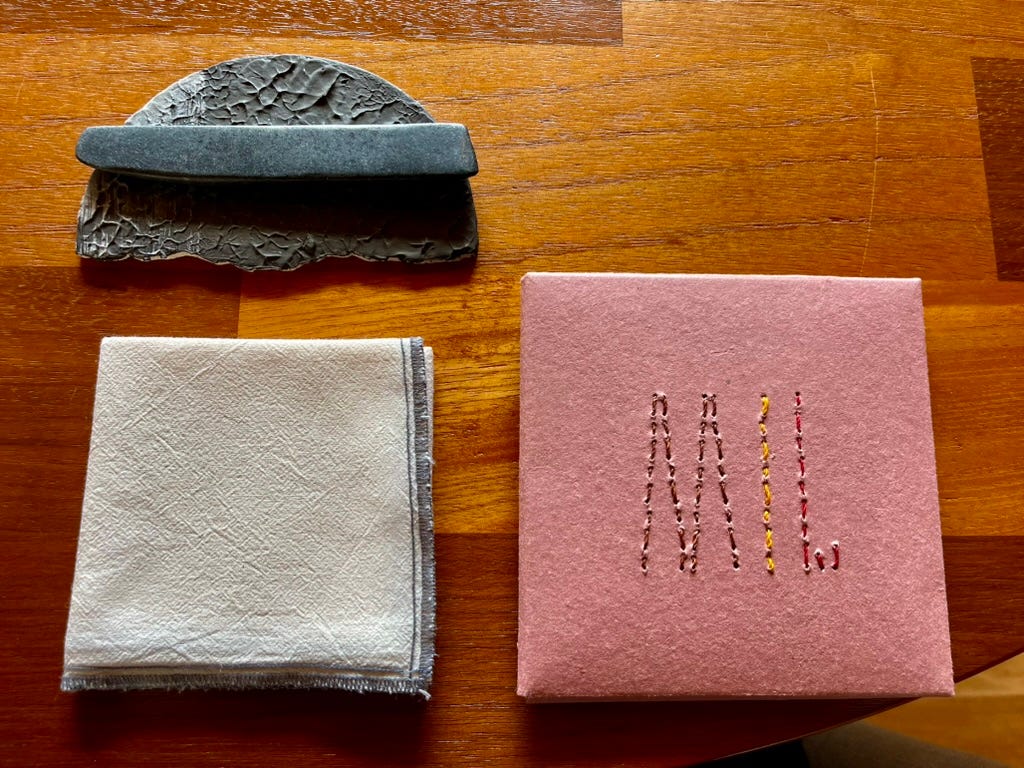
The meal begins with objects on the table. A hand-stitched menu cover. A woven napkin. A carved stone bowl. Everything made from materials found within miles of where you sit.
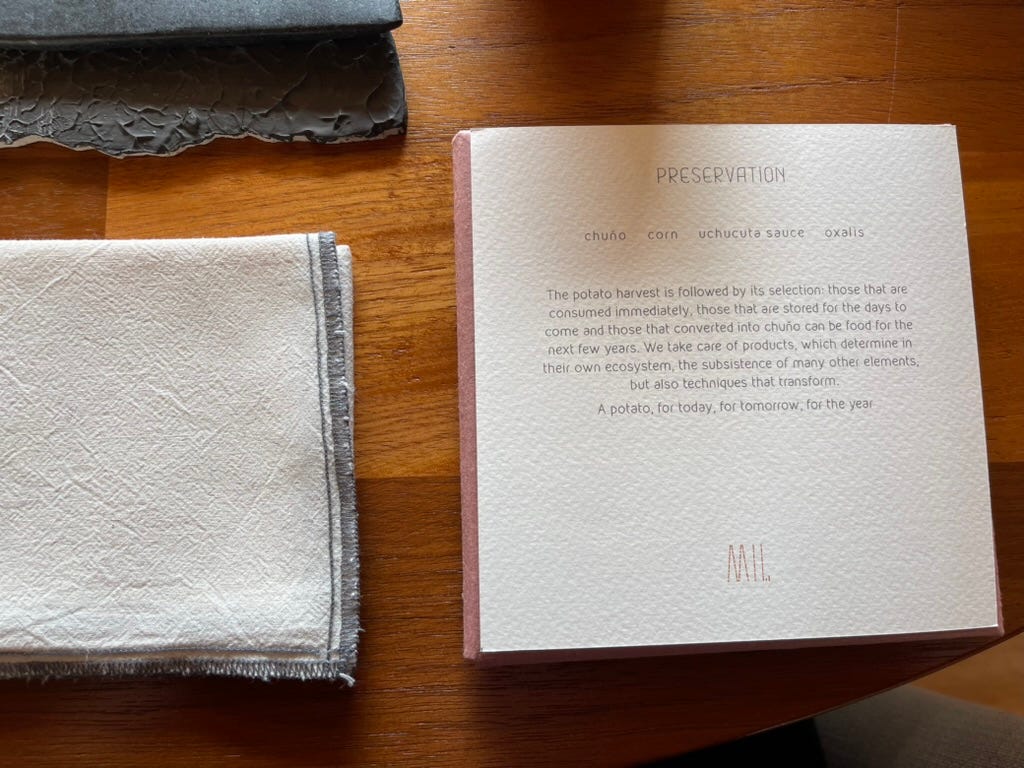
The first card hints at what’s coming: chuño, corn, uchucuta sauce, oxalis. “A potato, for today, for tomorrow, for the year.”
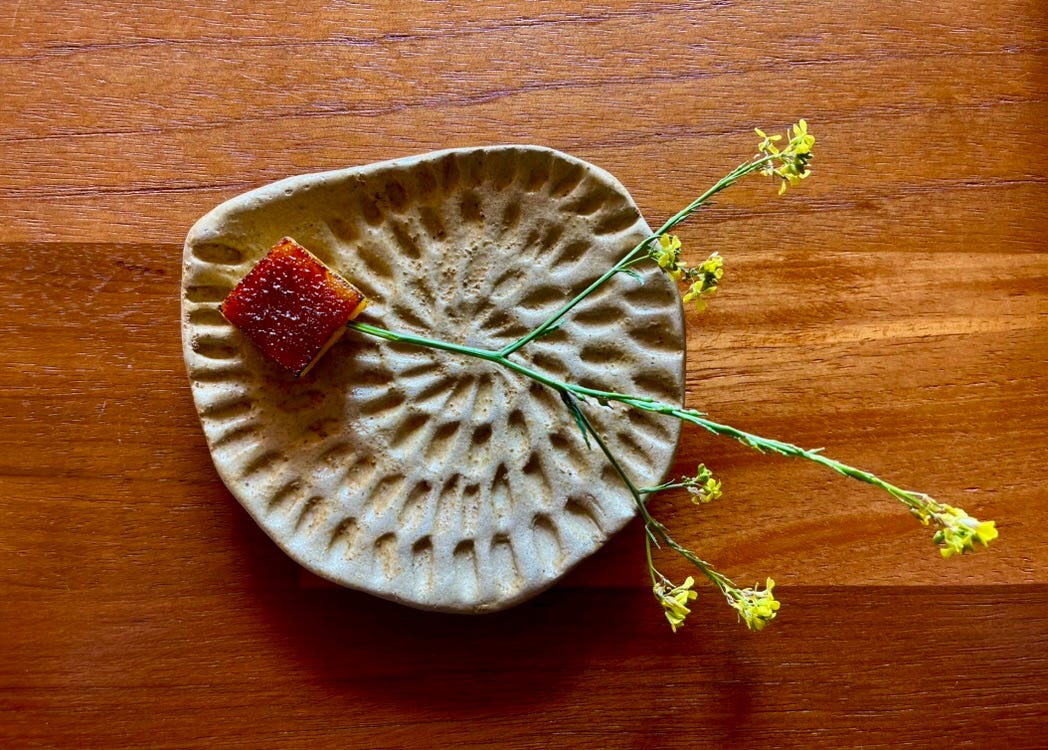
Before the courses begin, small bites arrive. Each plate is handmade ceramic, each garnish foraged from the surrounding hills.
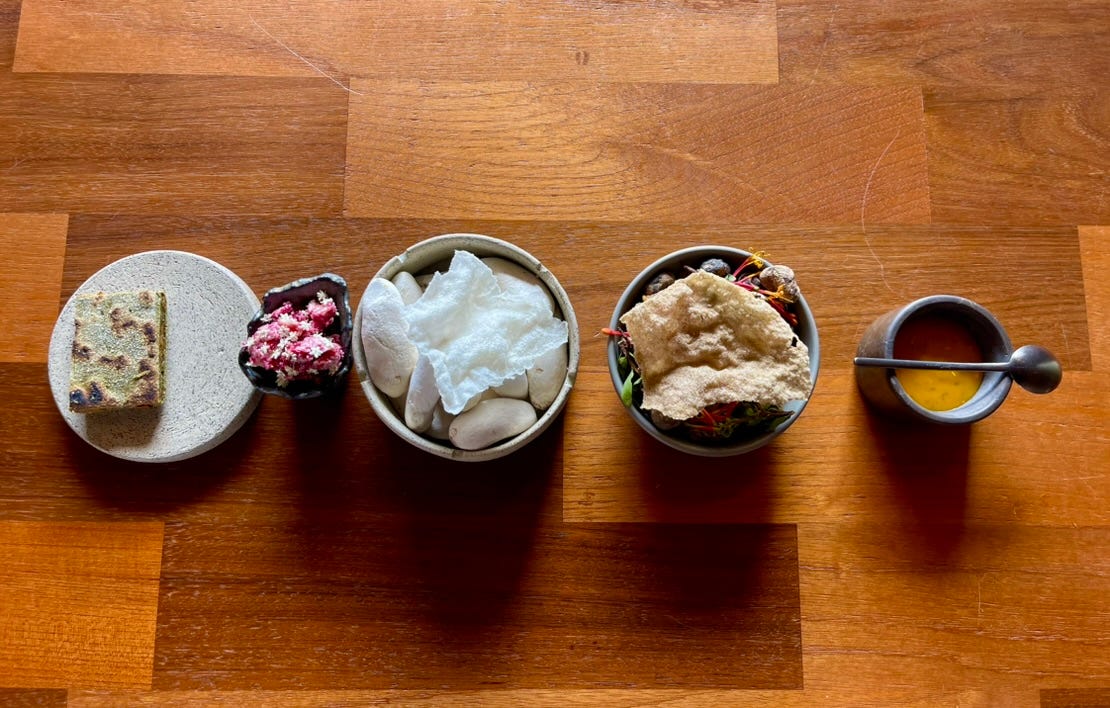
The opening spread. Five vessels, five preparations, five ways of understanding what grows at this altitude.
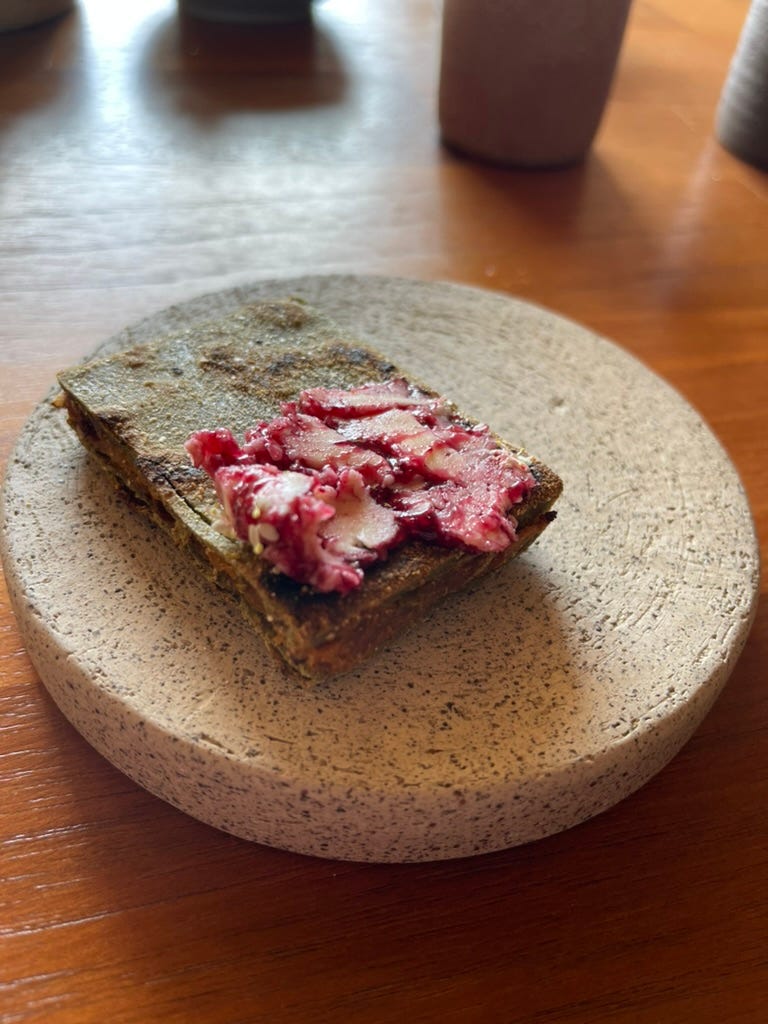
Bread served on stone. The pink comes from local produce—nothing here traveled far.
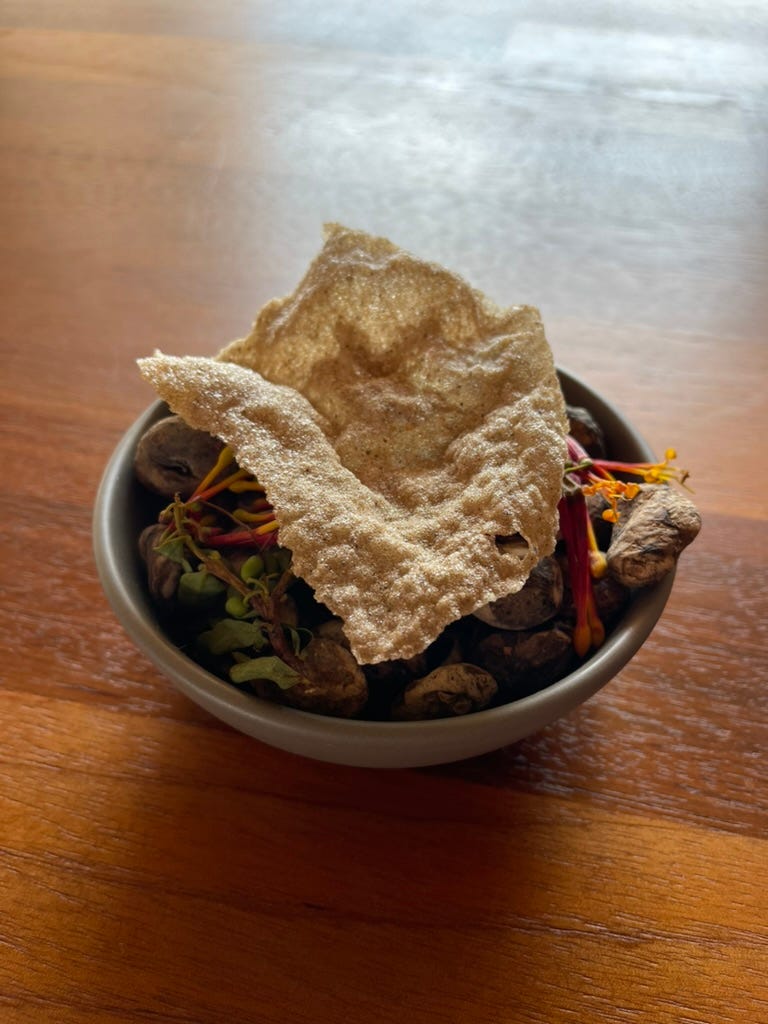
Texture and color. The wafer shatters; the stems beneath are tender. Contrast built into every bite.
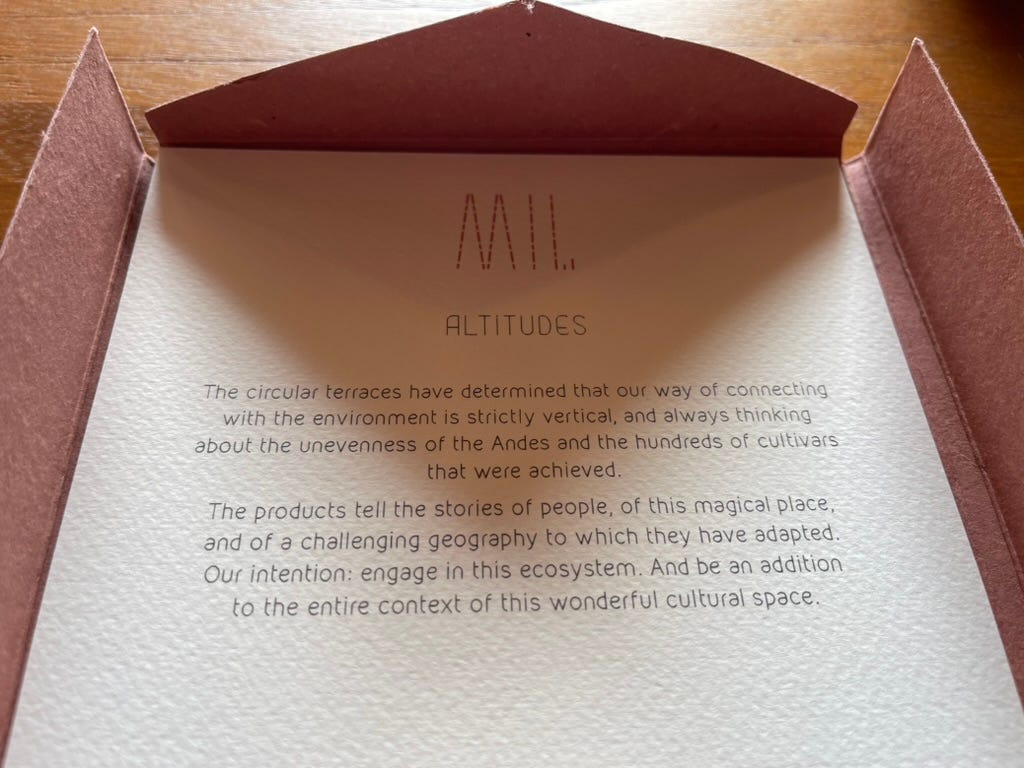
The philosophy, stated plainly: “The circular terraces have determined that our way of connecting with the environment is strictly vertical.”
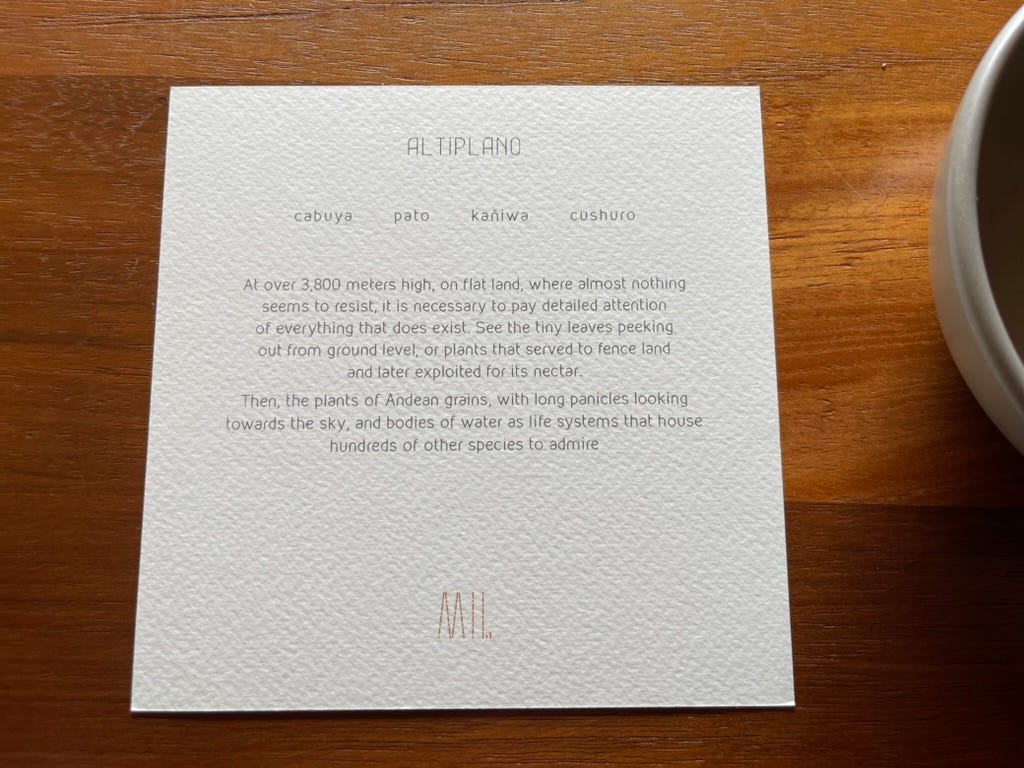
At over 3,800 meters, where almost nothing seems to resist, it is necessary to pay attention to everything that does exist.
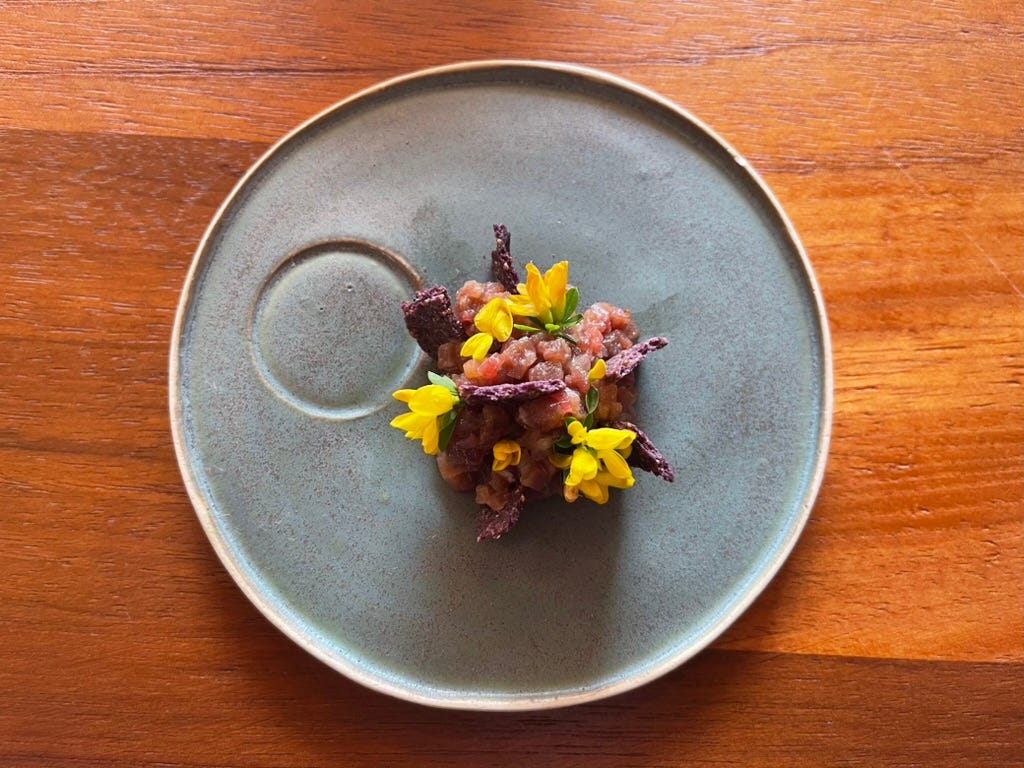
Duck from the high plateau, dressed with flowers that grow at the same altitude. The plate’s circular indent echoes the terraces outside.
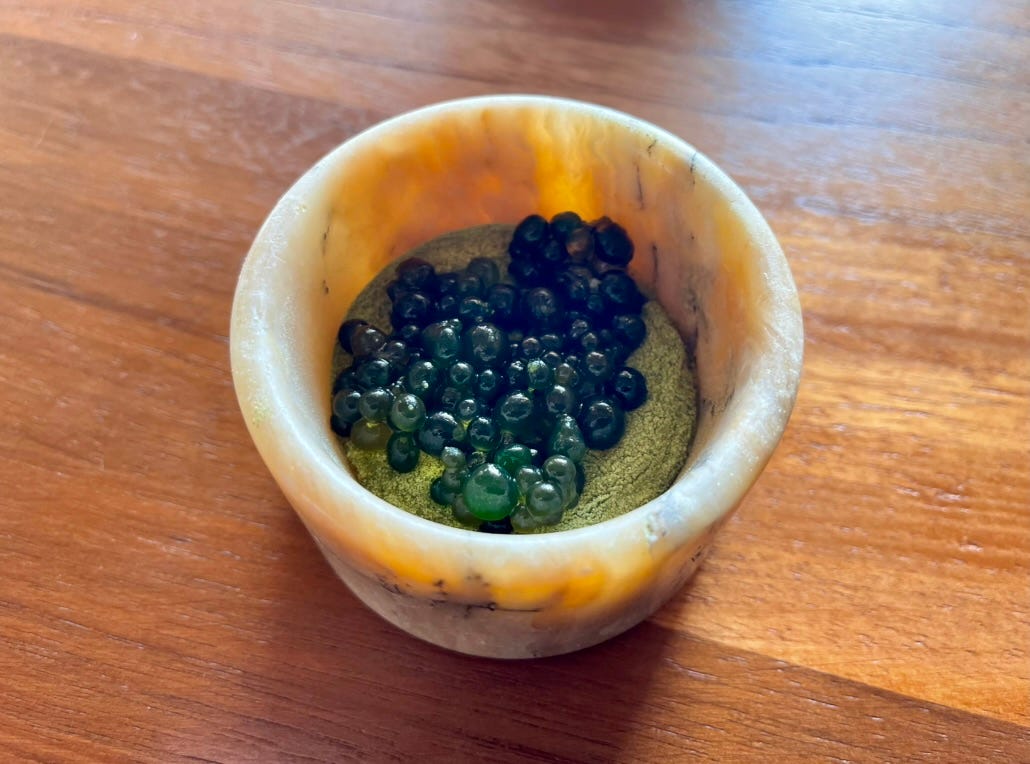
Cushuro: dark spheres from high-altitude lakes. Rich in protein, gathered by women and children when it rains. An ingredient most of the world has never seen.
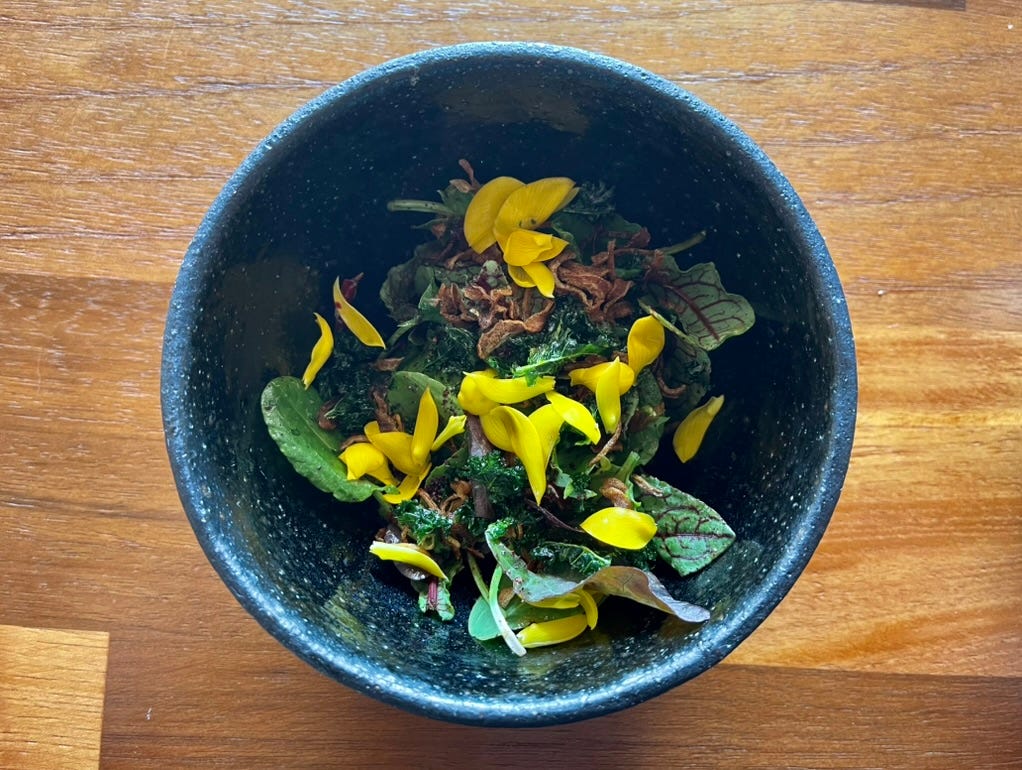
Greens and flowers in a speckled black bowl. The yellow petals aren’t decoration—they’re food.
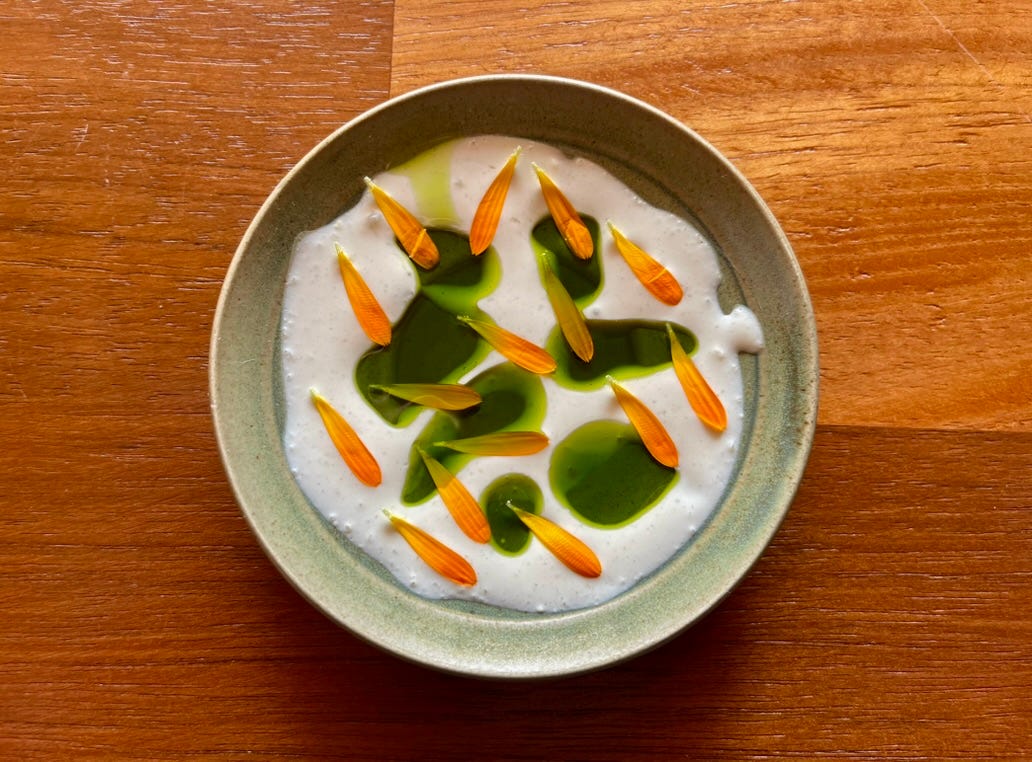
Creamy, cool, scattered with petals. The green pools are herb oil made from plants growing just outside.
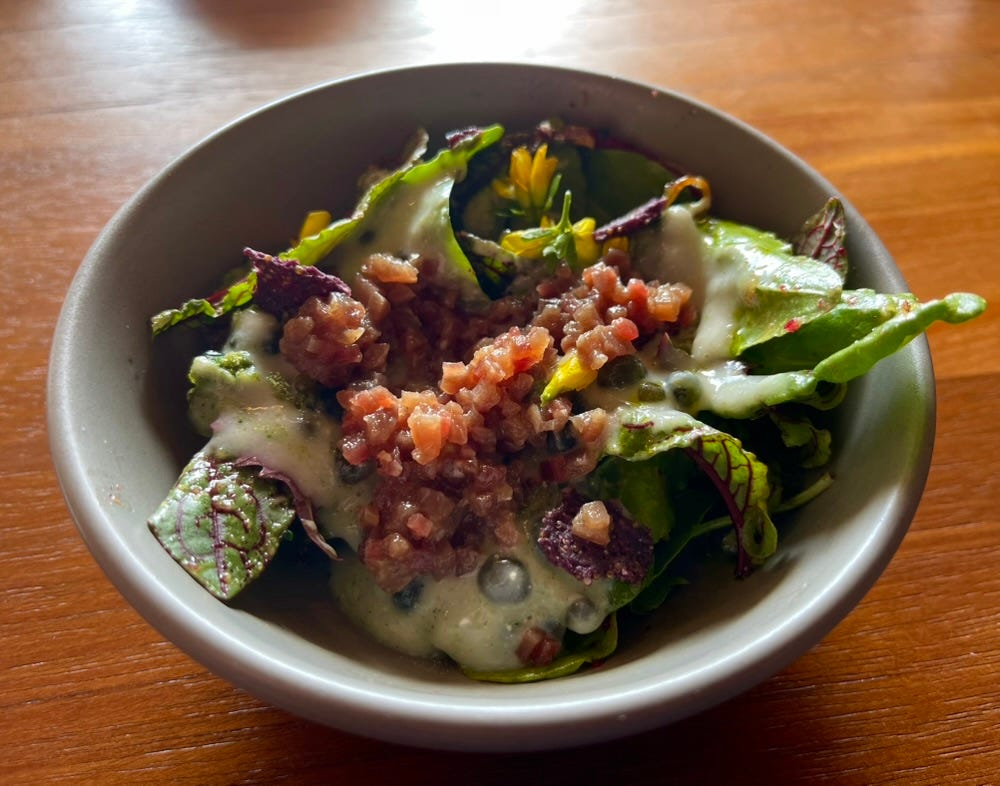
Textures layered: silky cream, tender leaves, the pop of grain. Each component from a different part of the ecosystem.
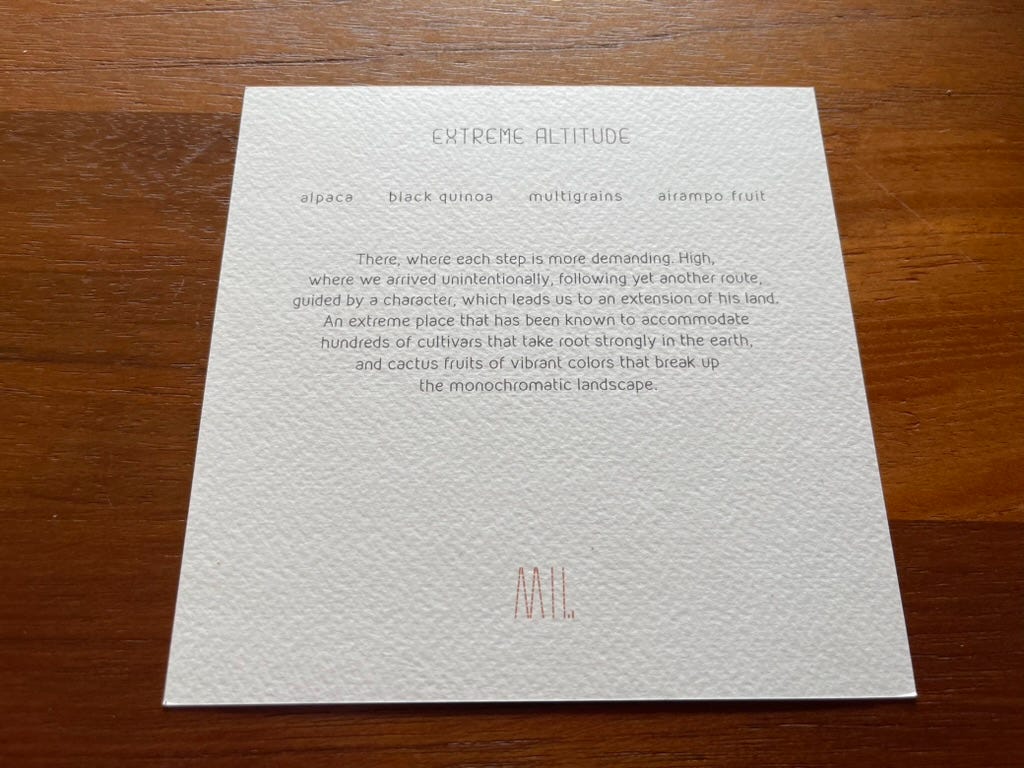
“An extreme place that has been known to accommodate hundreds of cultivars that take root strongly in the earth, and cactus fruits of vibrant colors that break up the monochromatic landscape.”
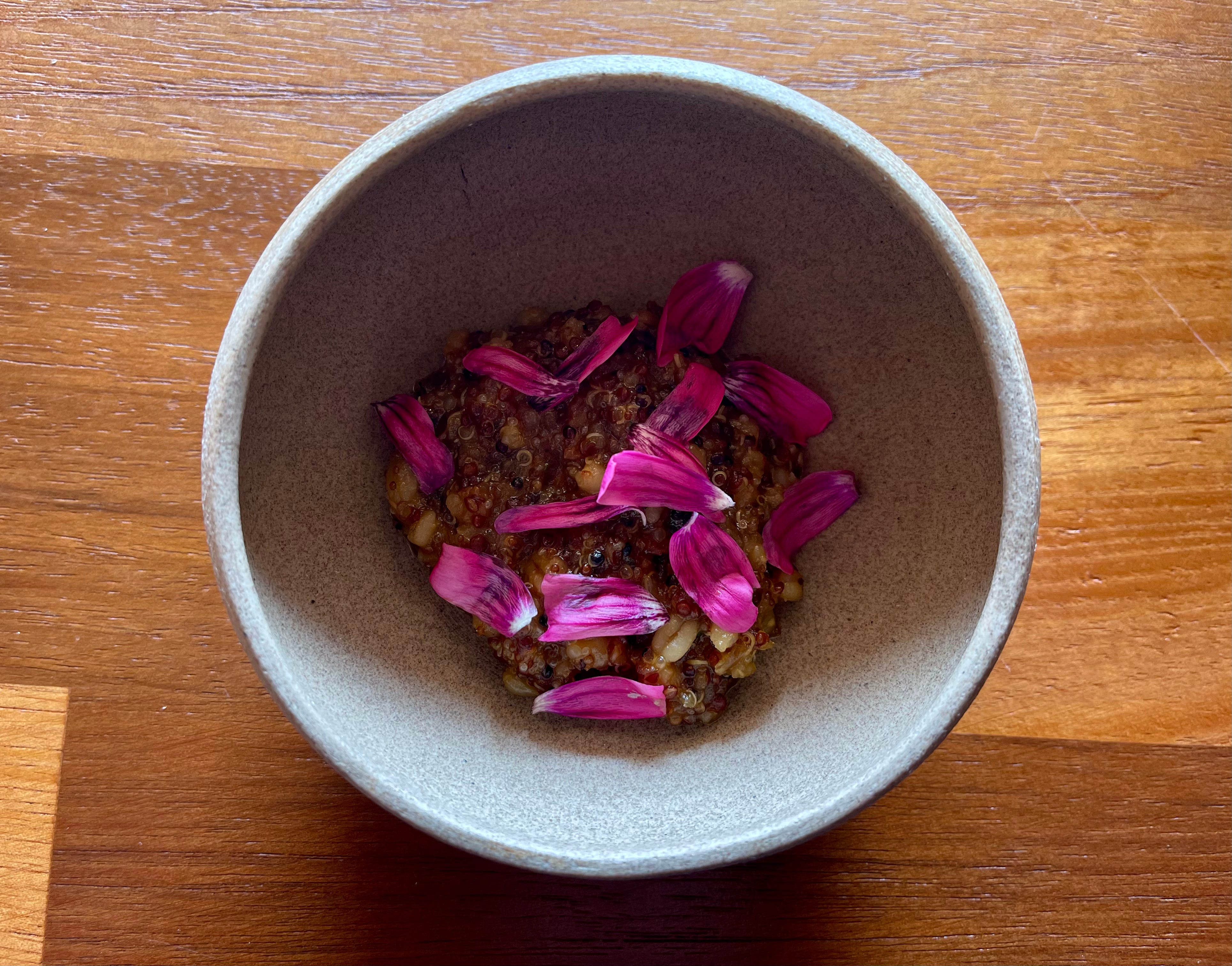
Black quinoa cooked until tender. The pink petals come from flowers that bloom briefly at this altitude.
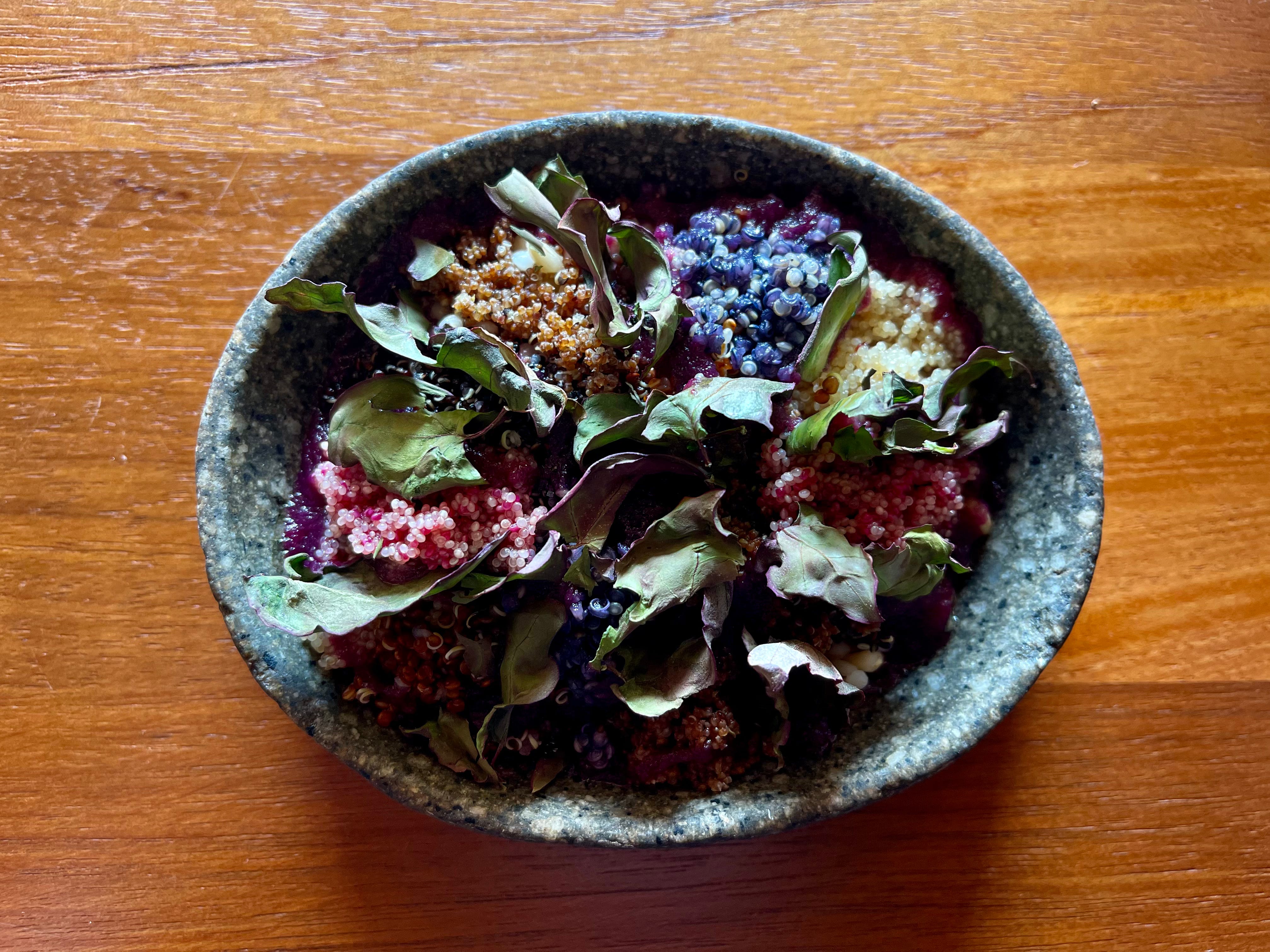
Multiple quinoa varieties in one dish—pink, gold, white, black. Each grown in the valleys nearby.
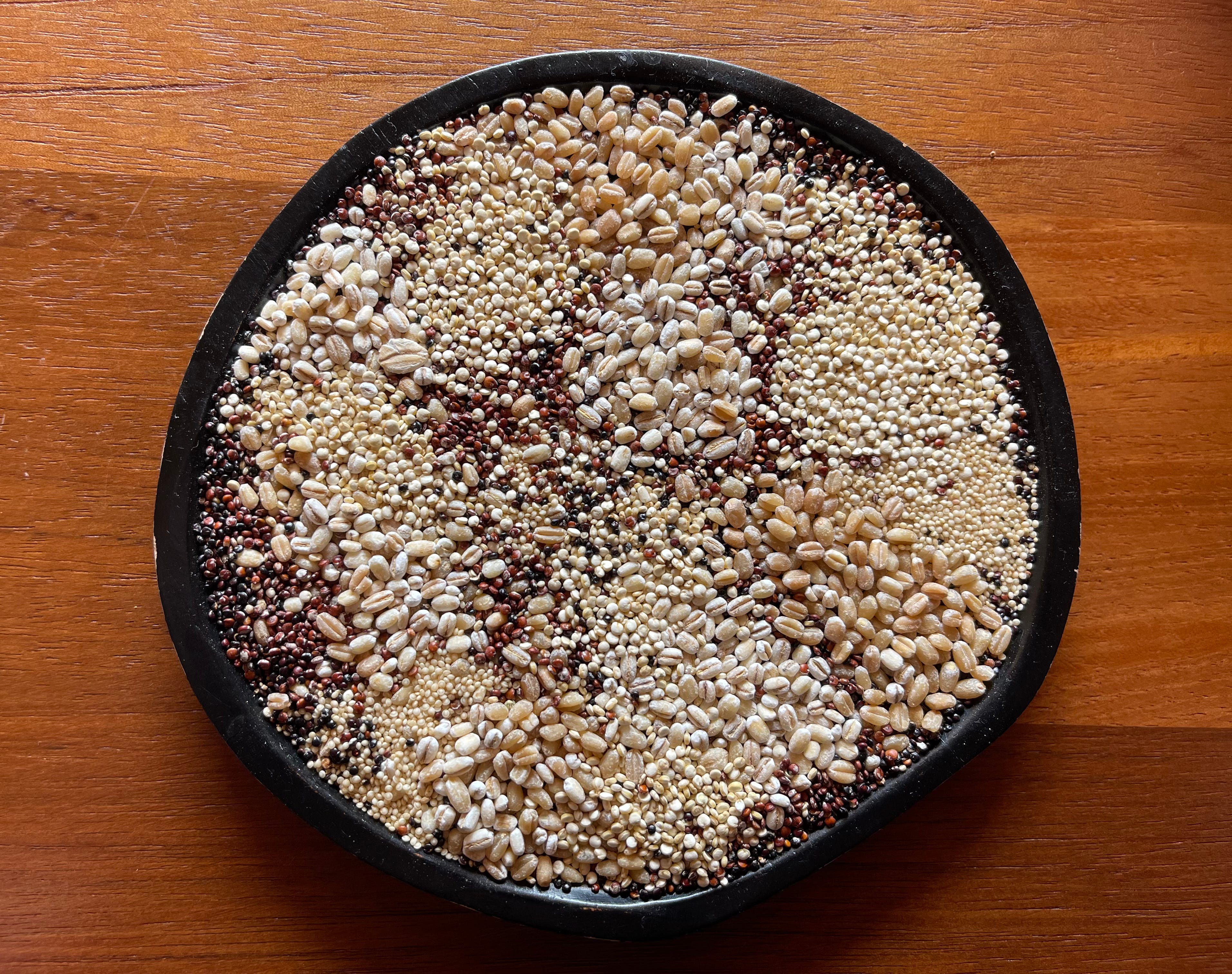
The raw ingredients, displayed. Barley, quinoa, kiwicha. Grains that have sustained Andean communities for millennia.
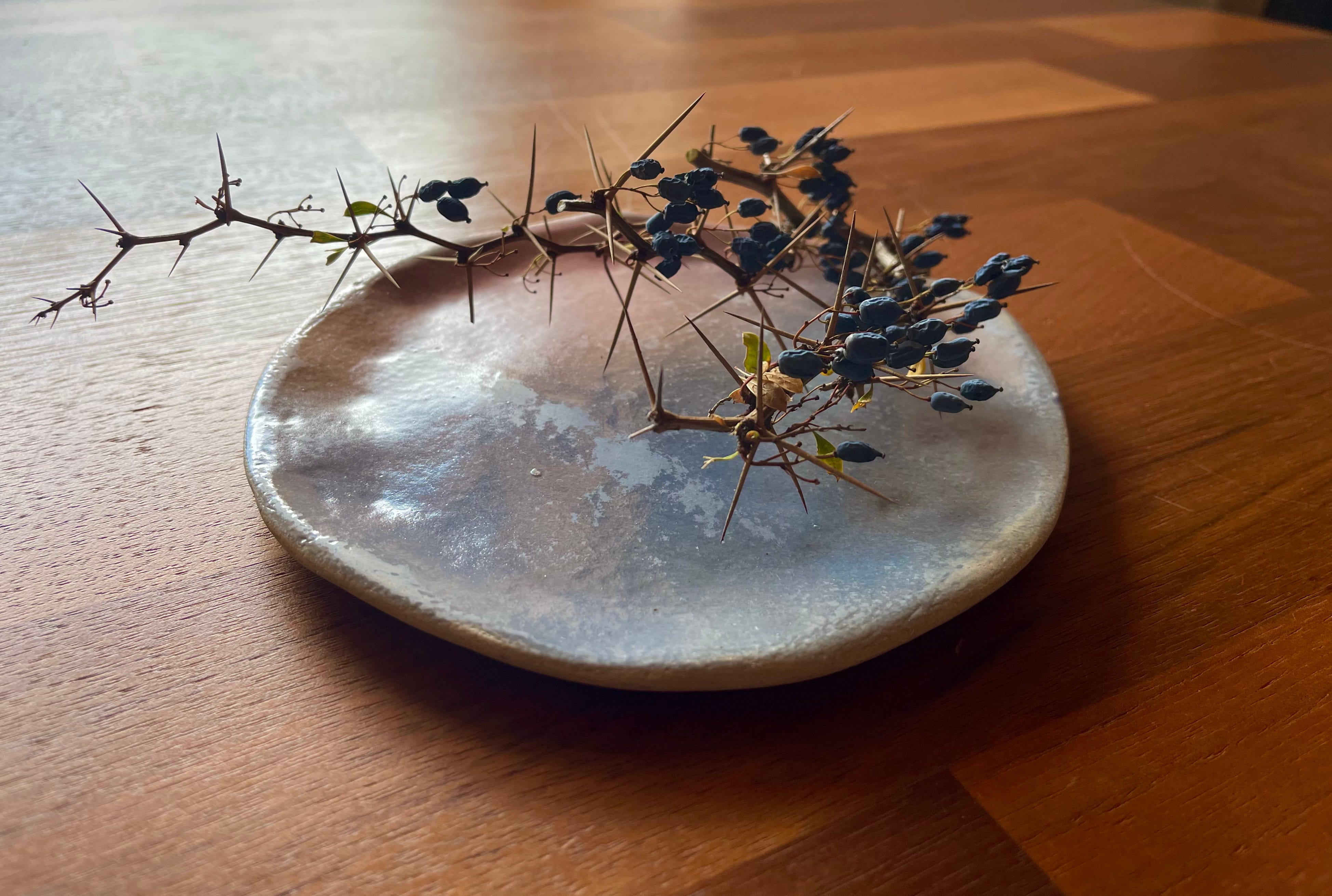
Not every element is edible. Some are meant to be seen—to show what grows here, thorns and all.
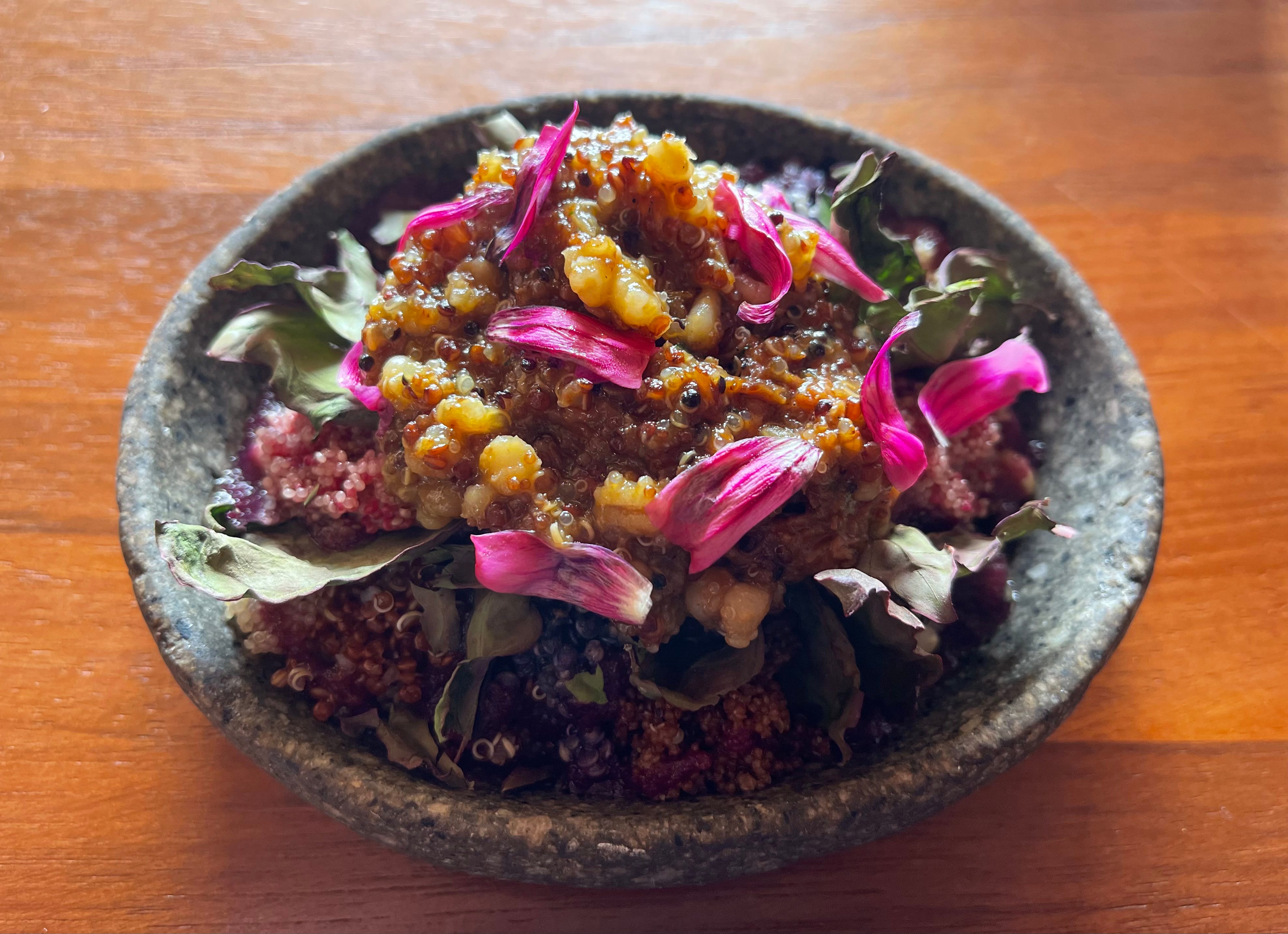
The final preparation in this course. Warmth on top, grain beneath, petals throughout.
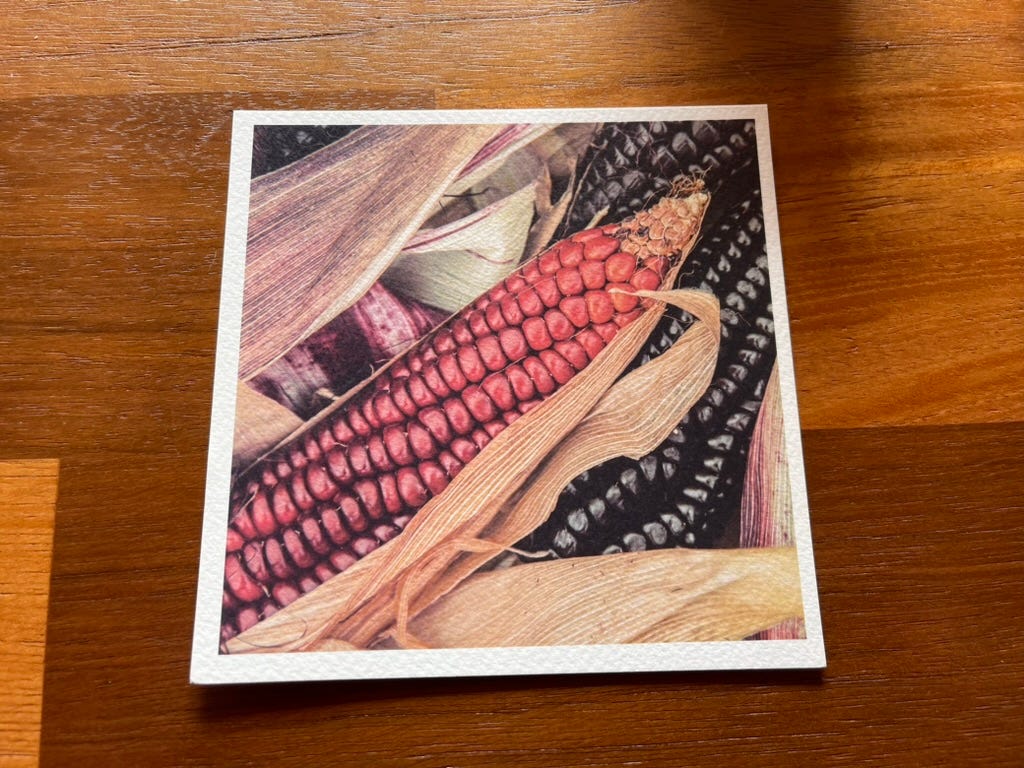
An image of what’s coming: native corn varieties, red and black, still in their husks.
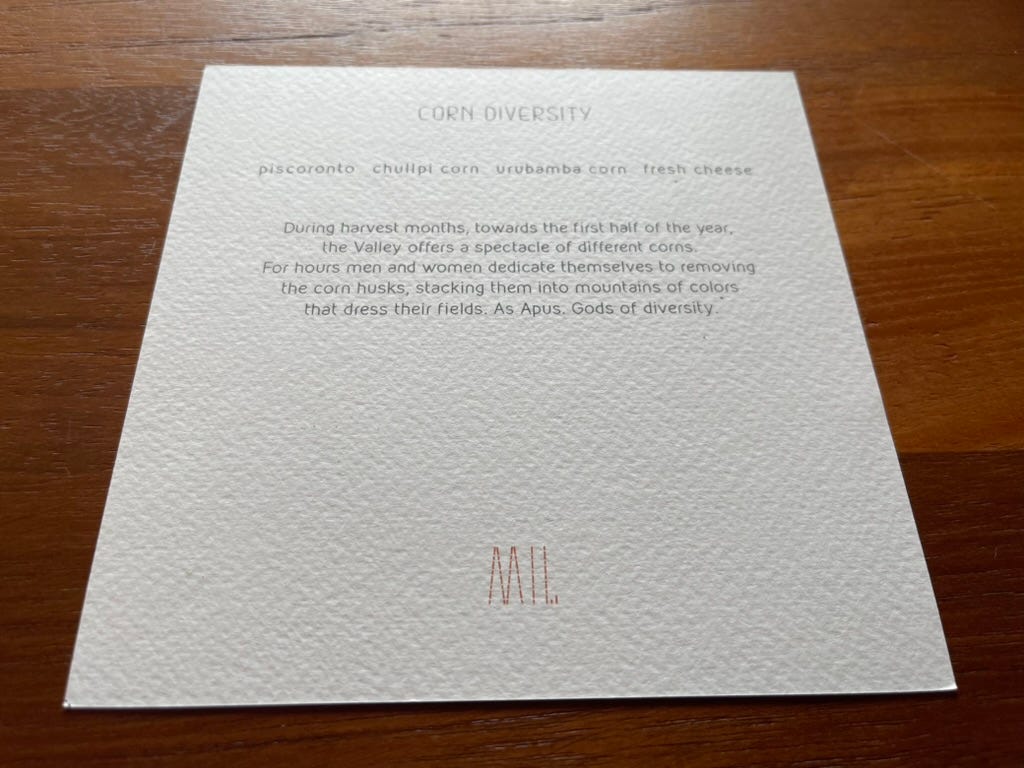
“During harvest months, the Valley offers a spectacle of different corns. For hours men and women dedicate themselves to removing the corn husks, stacking them into mountains of colors.”
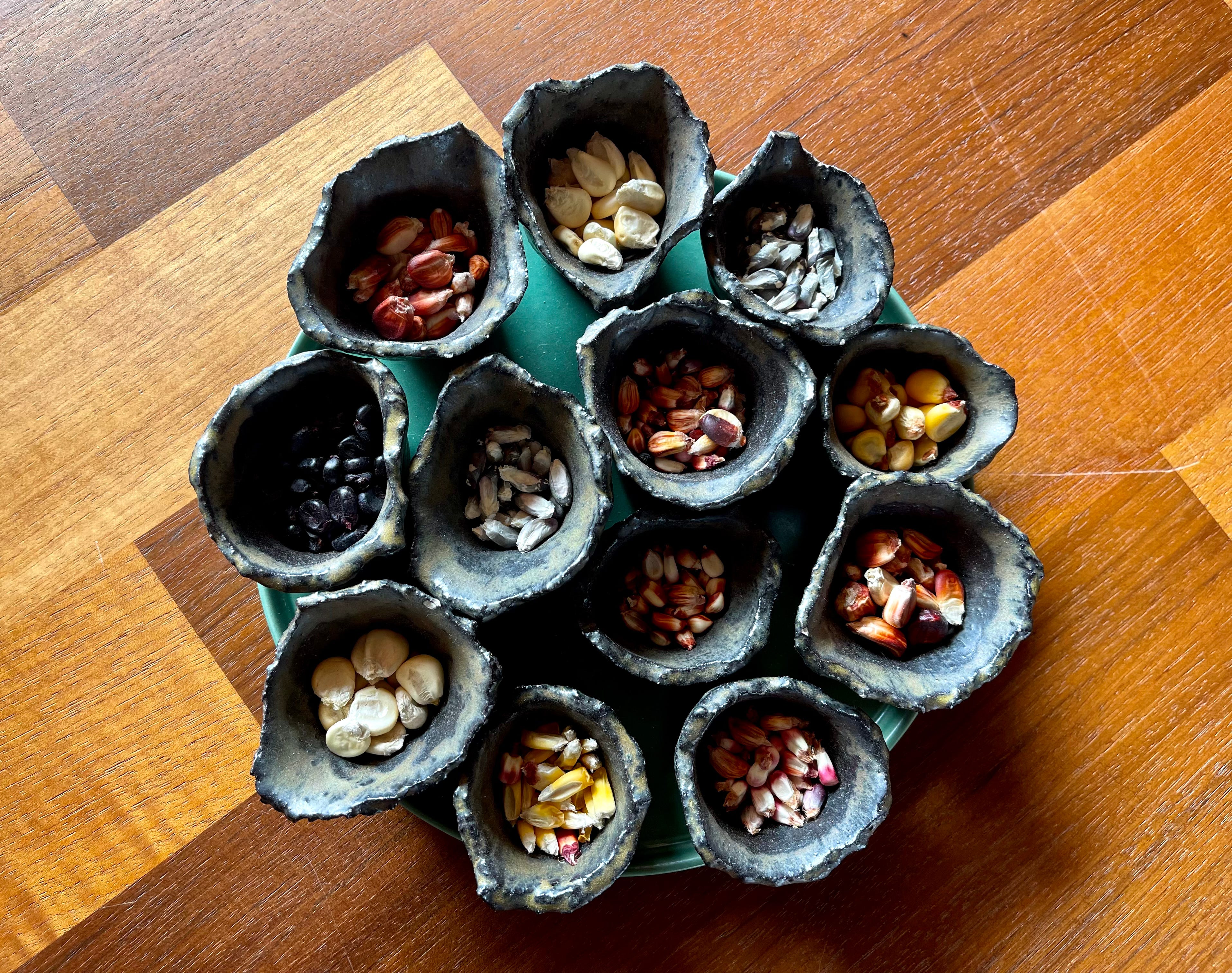
Thirteen varieties, each in its own charred cup. This is what diversity looks like when it hasn’t been bred out.
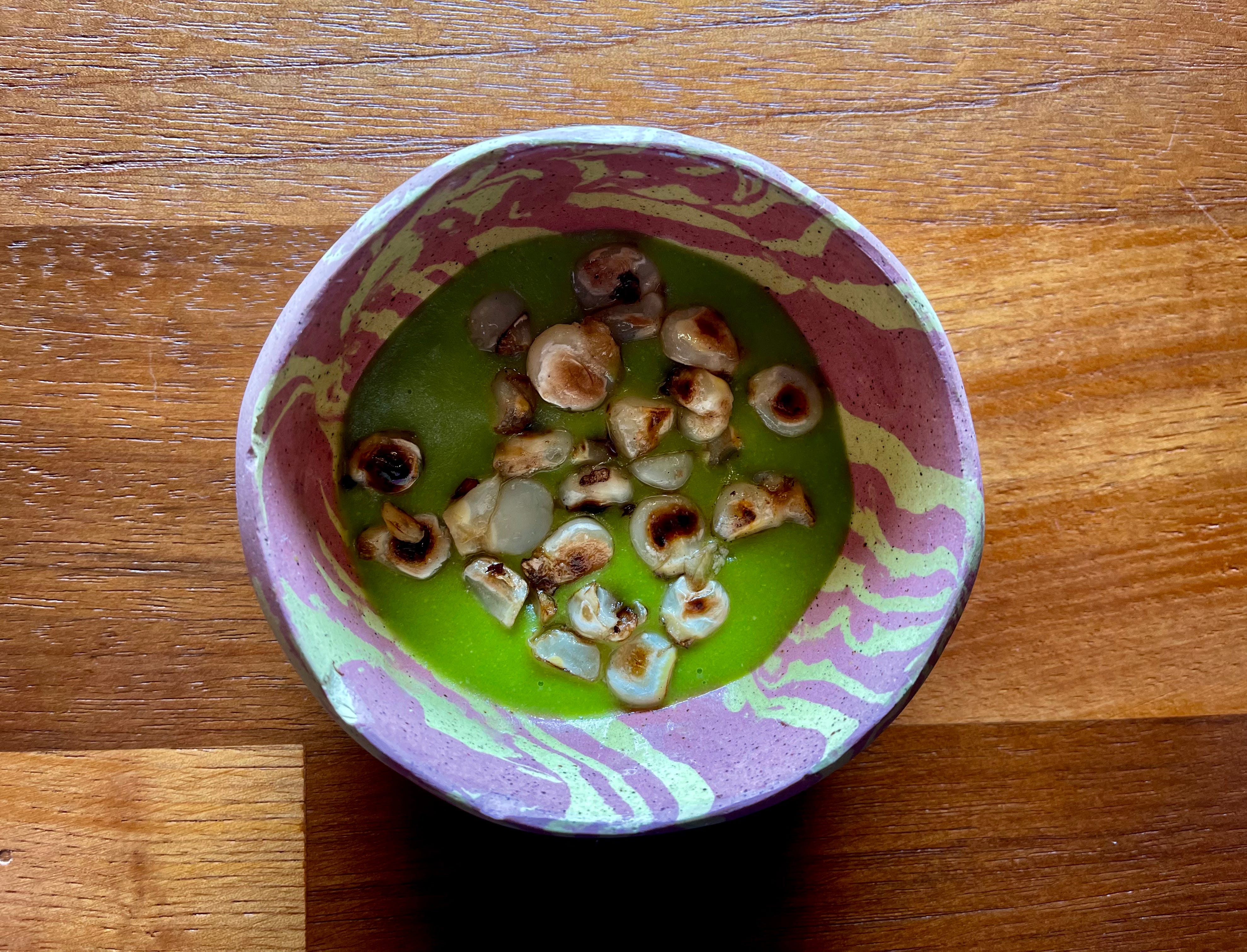
Bright green, studded with toasted corn. The swirled bowl is as striking as what it holds.
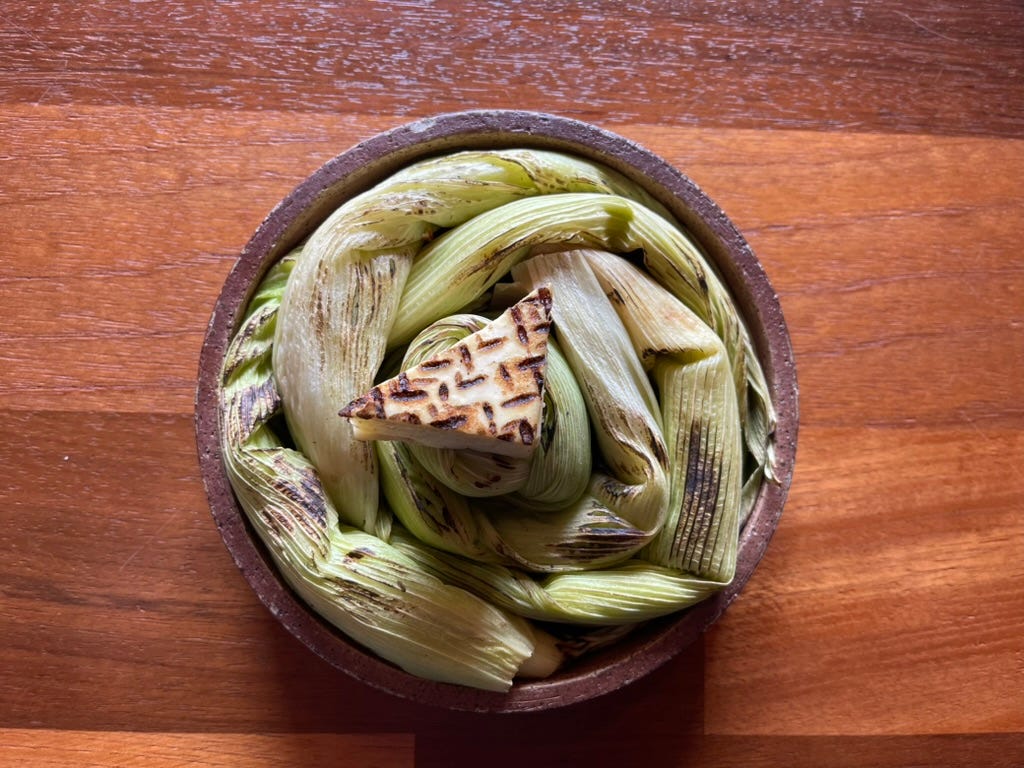
Fresh cheese, grilled and nestled in husks. Simple. The corn that made the dish also presents it.
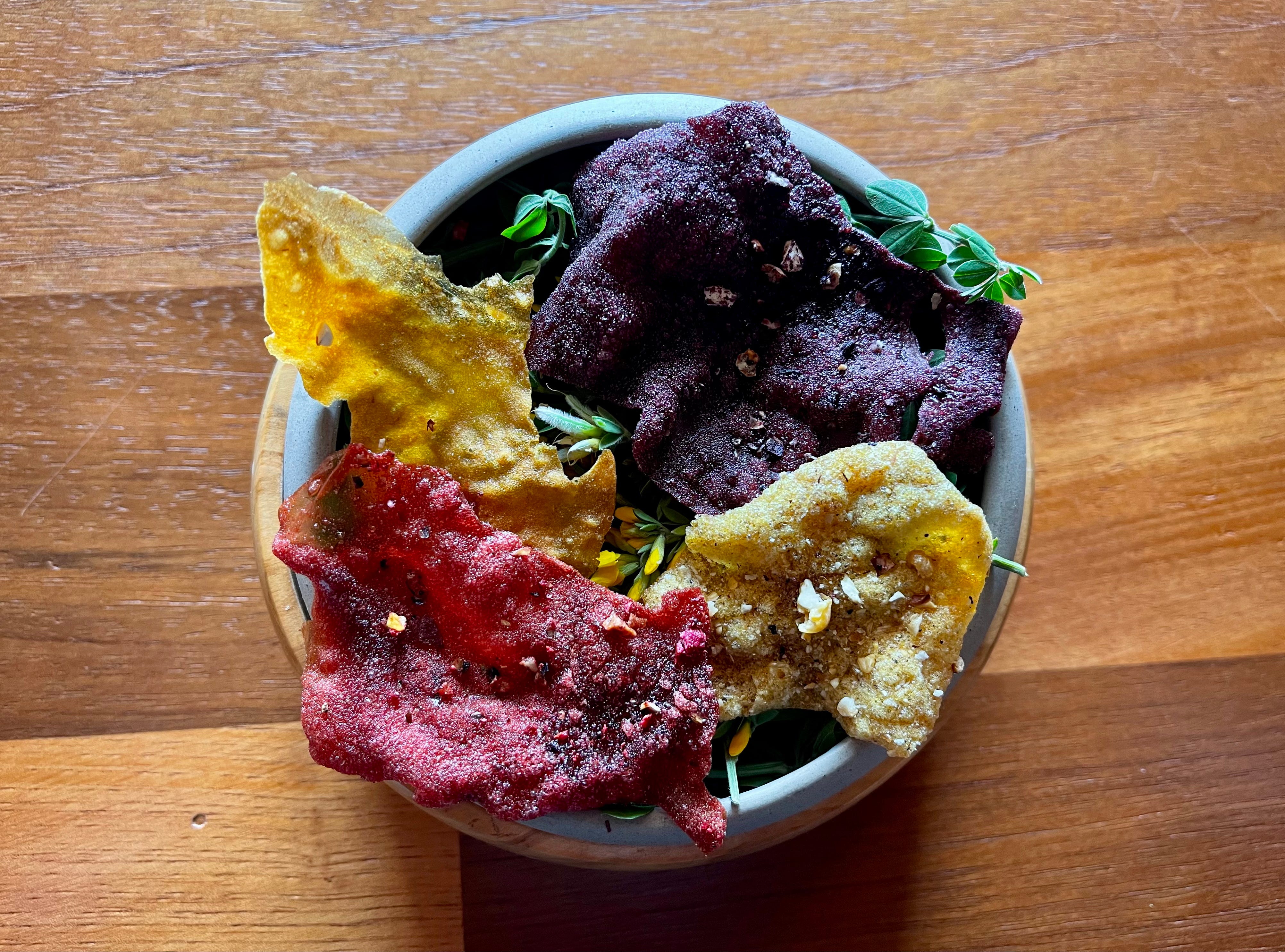
Purple, red, yellow. Each color from a different variety, each variety with its own flavor.
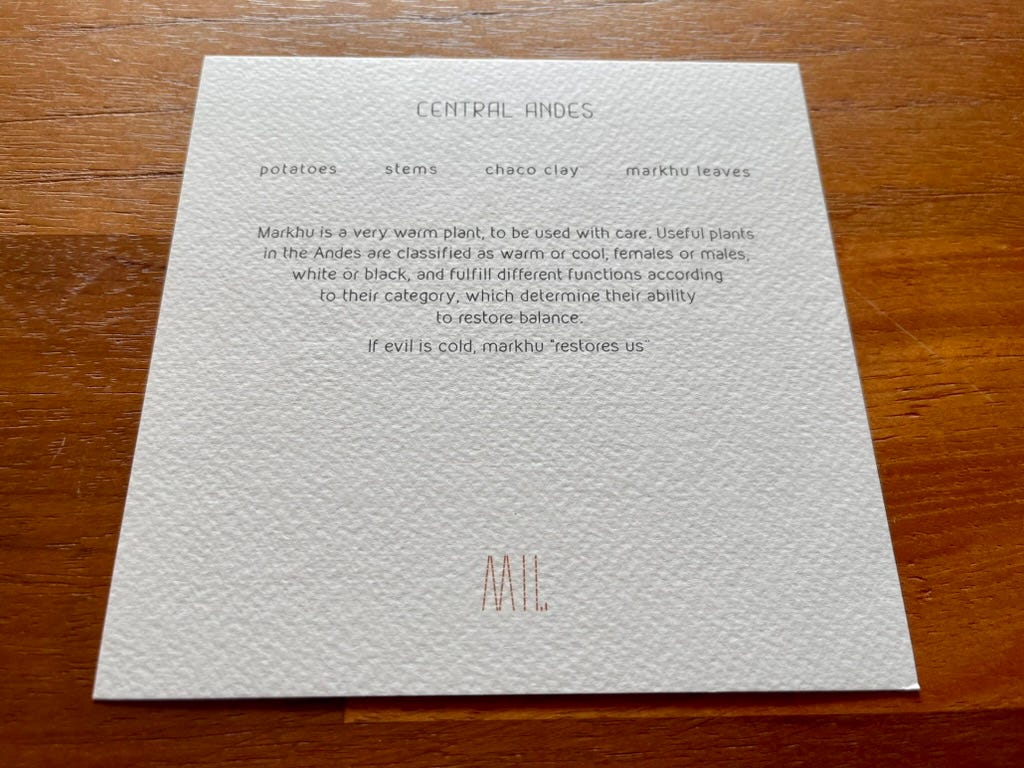
“Markhu is a very warm plant, to be used with care. If evil is cold, markhu ‘restores us.’”
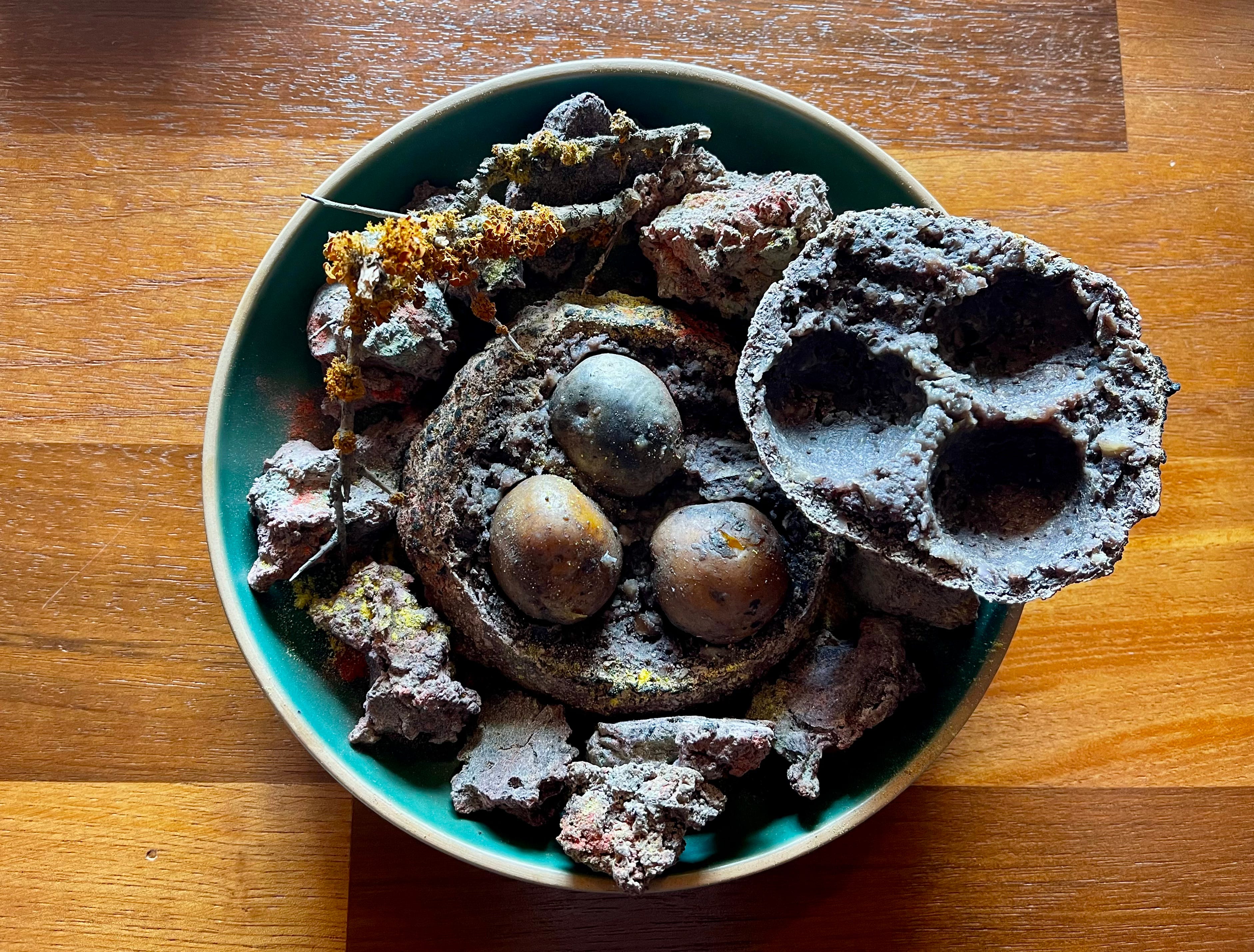
Peru has more than 4,000 native potato varieties. Here, three sit in volcanic rock, looking like they were just unearthed.
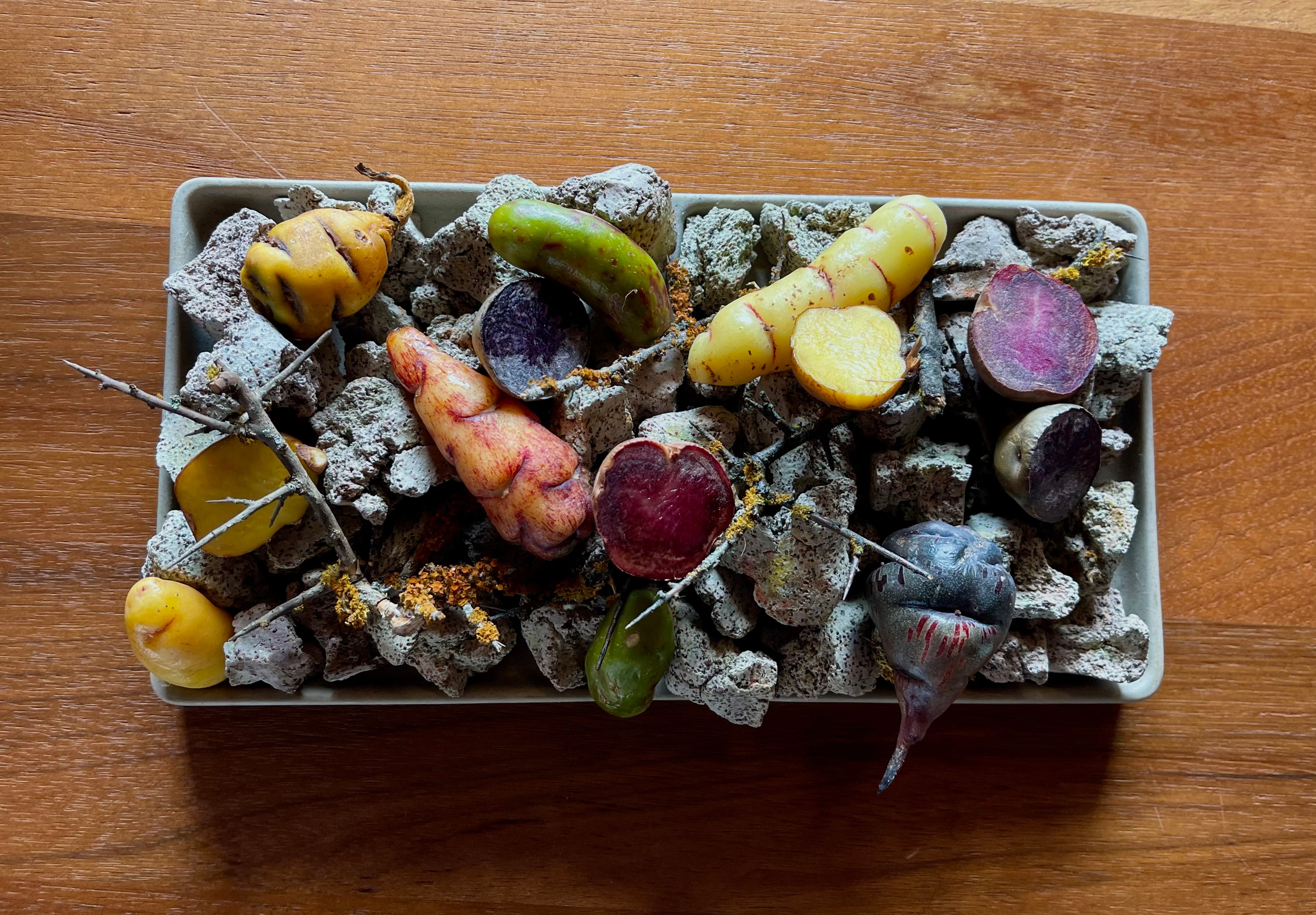
Yellow, purple, green, striped. Colors you won’t find in any supermarket. These are the ancestors of every potato you’ve eaten.
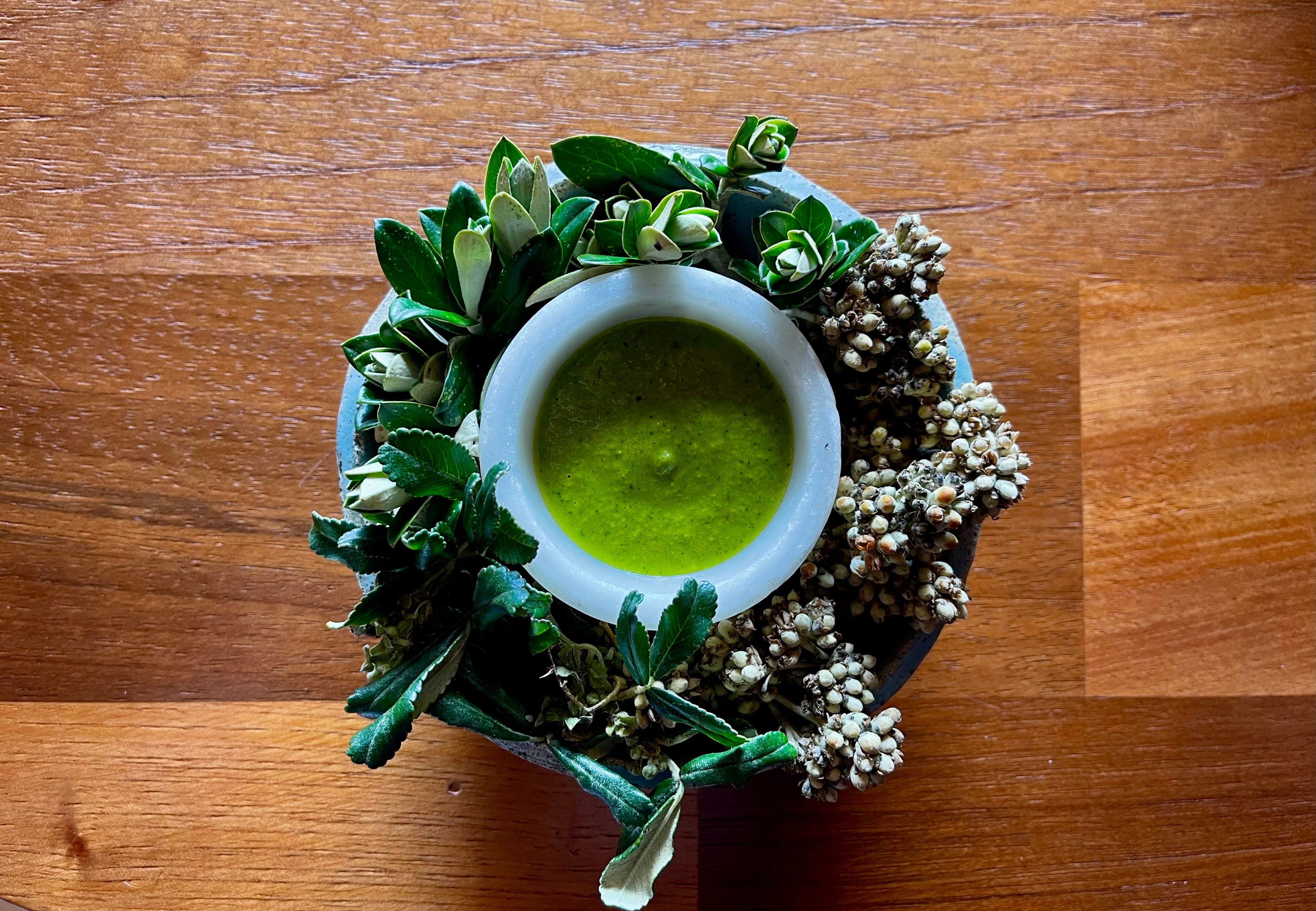
Vivid green, surrounded by living plants. The succulents around the bowl grow wild on the hillsides.
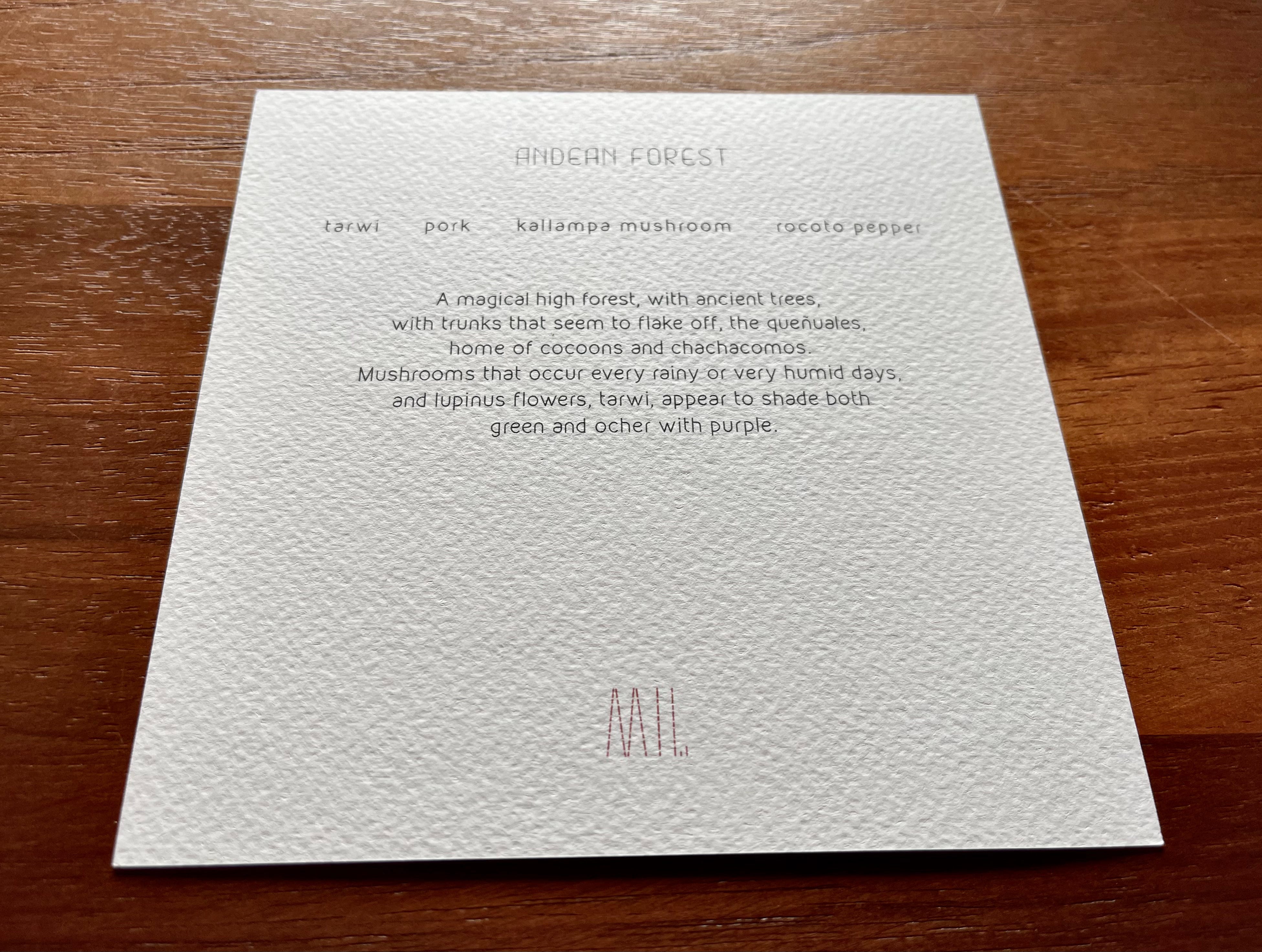
“A magical high forest, with ancient trees, with trunks that seem to flake off, the queñuales.”
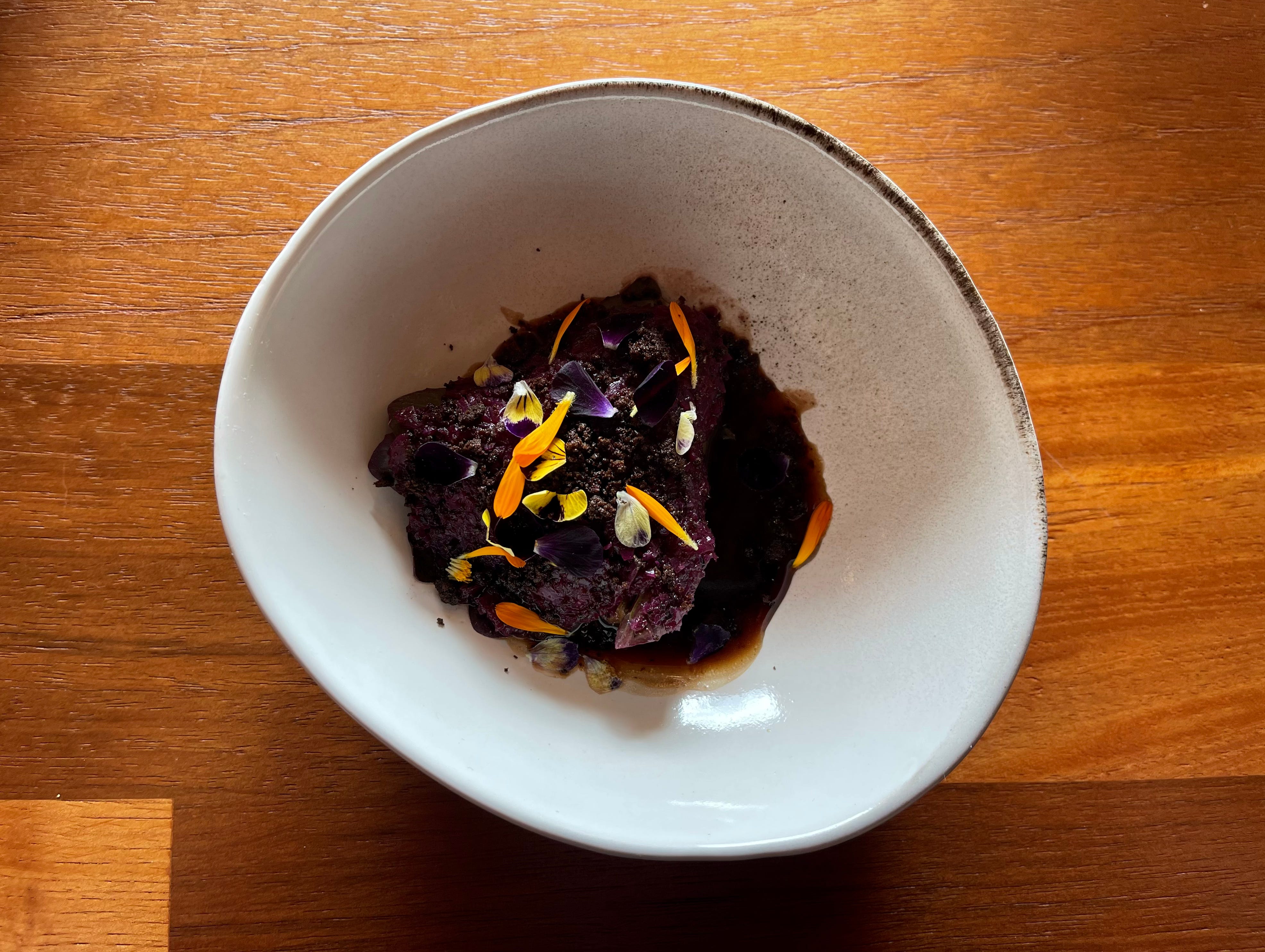
Pork from the forest course, scattered with petals. The deep purple comes from reduction, not dye.
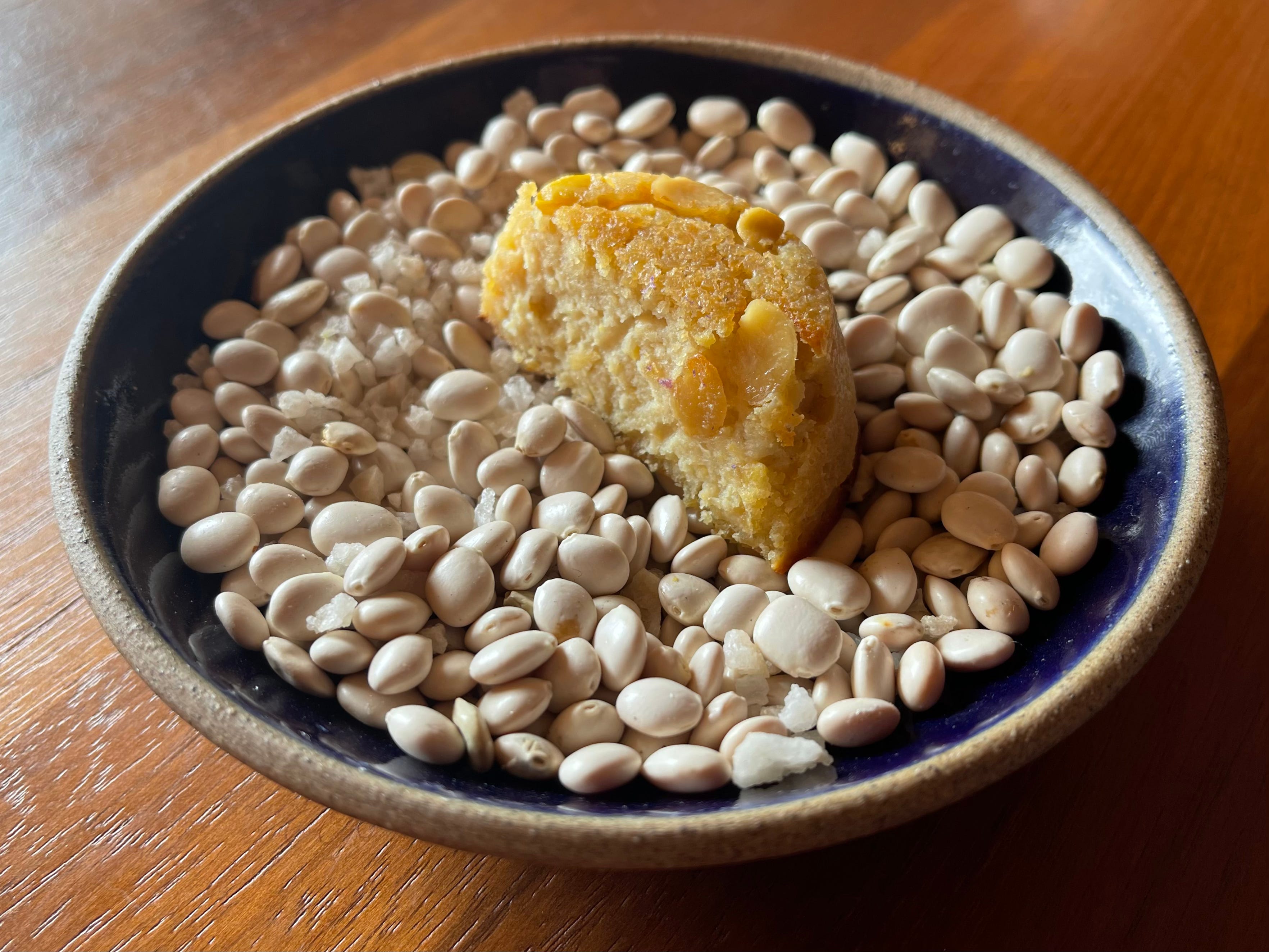
Cornbread resting on a bed of tarwi—an Andean lupin bean, high in protein. The raw ingredient becomes the presentation.
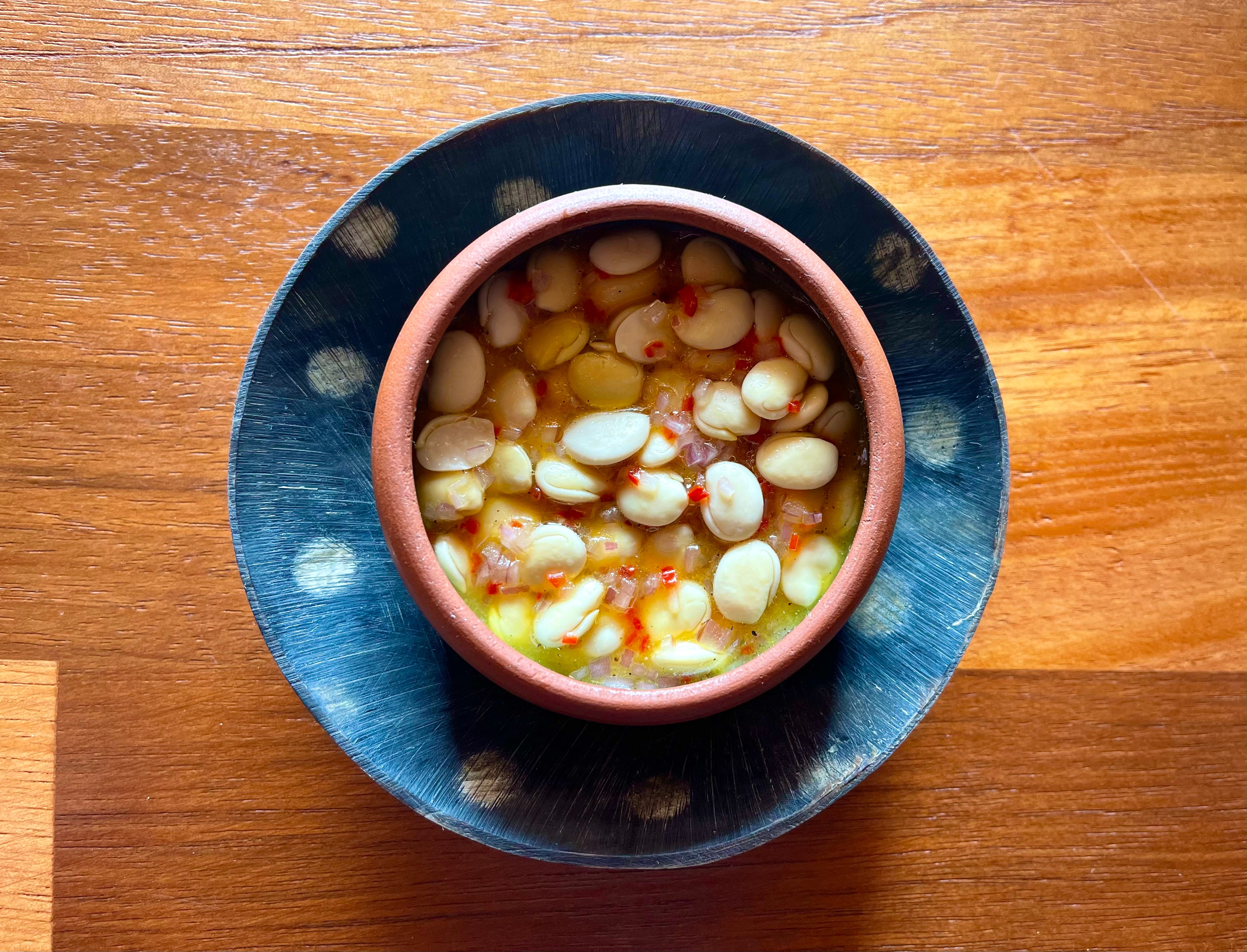
The same beans, now cooked in broth with rocoto pepper. A complete dish from a single legume.
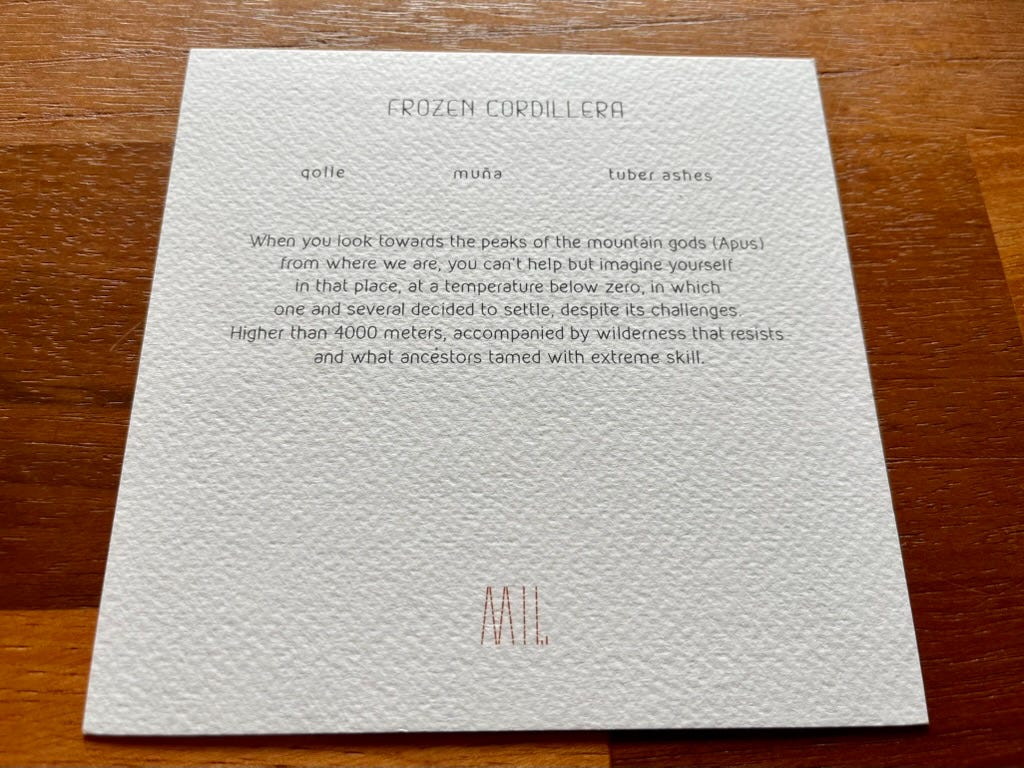
“When you look towards the peaks of the mountain gods (Apus) from where we are, you can’t help but imagine yourself in that place, at a temperature below zero.”
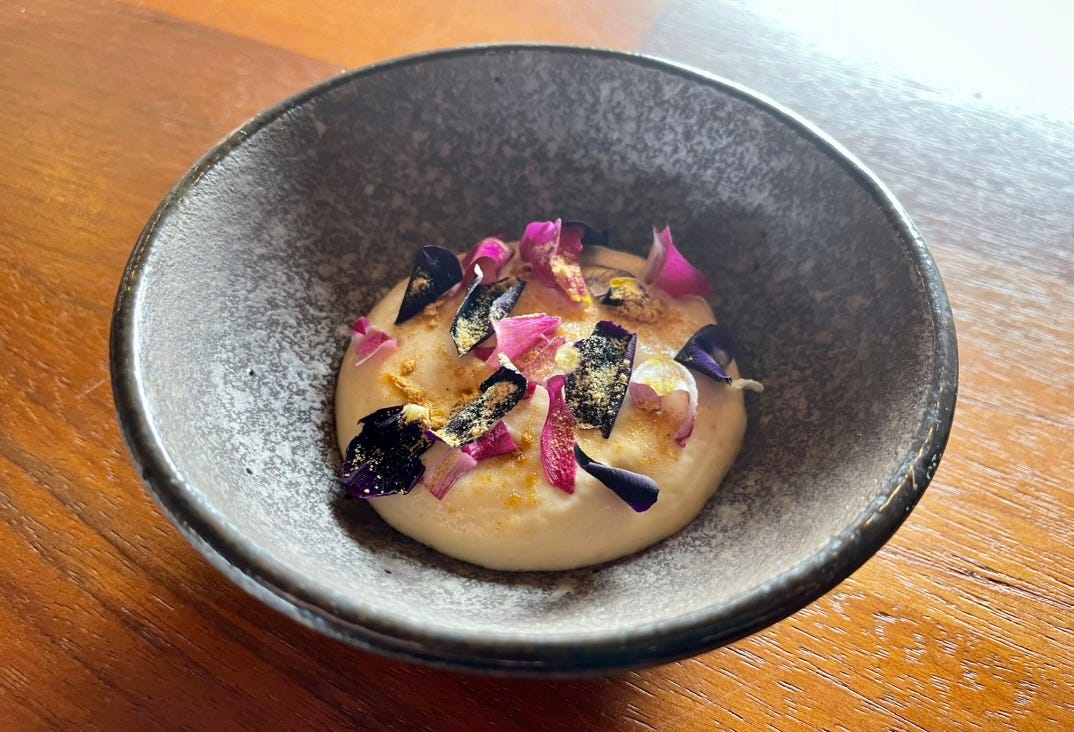
The transition to sweet. Smooth cream, scattered with petals that look almost frozen themselves.
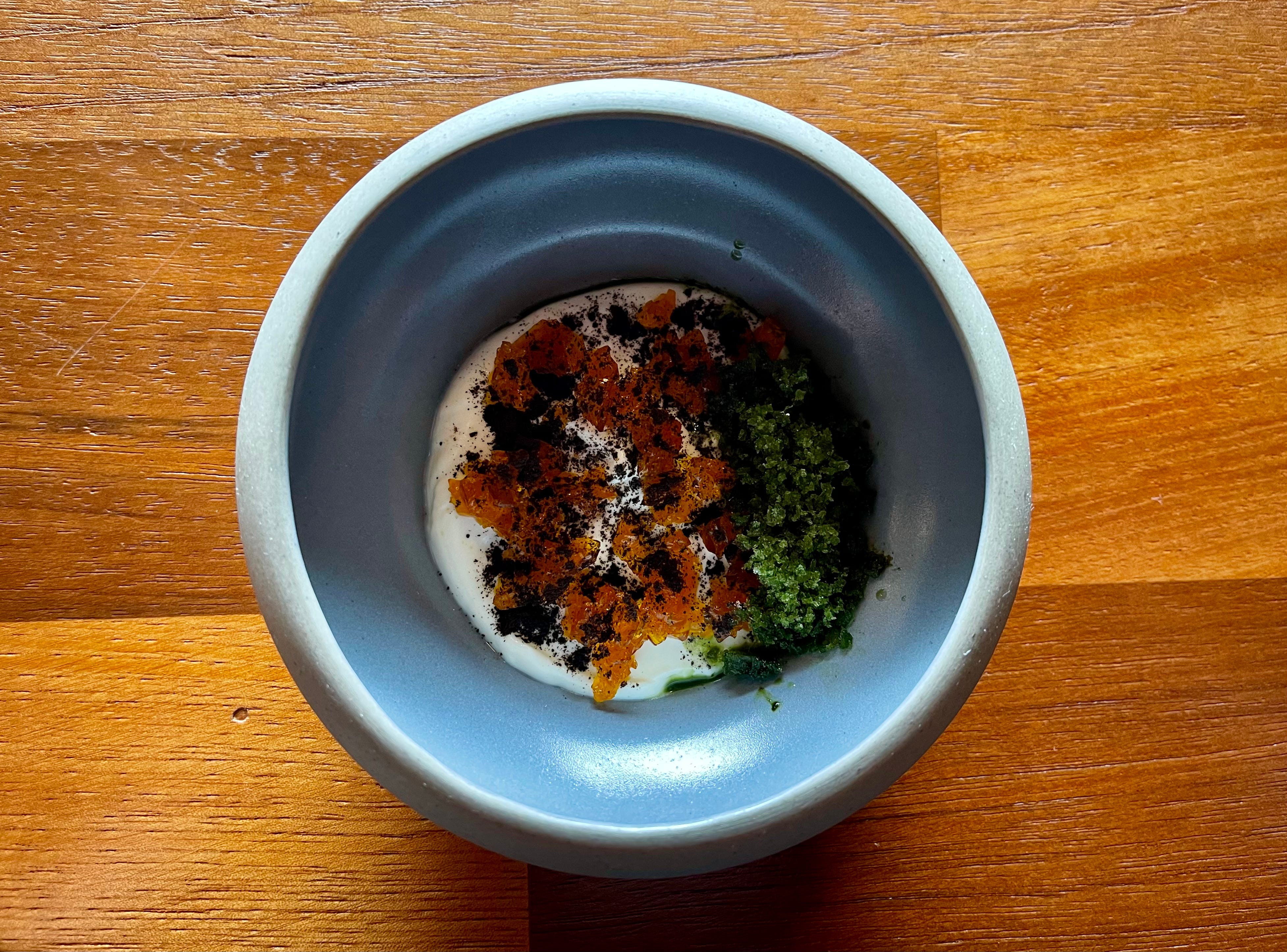
Muña herb, tuber ashes, cream. The flavors of the frozen peaks, translated into dessert.
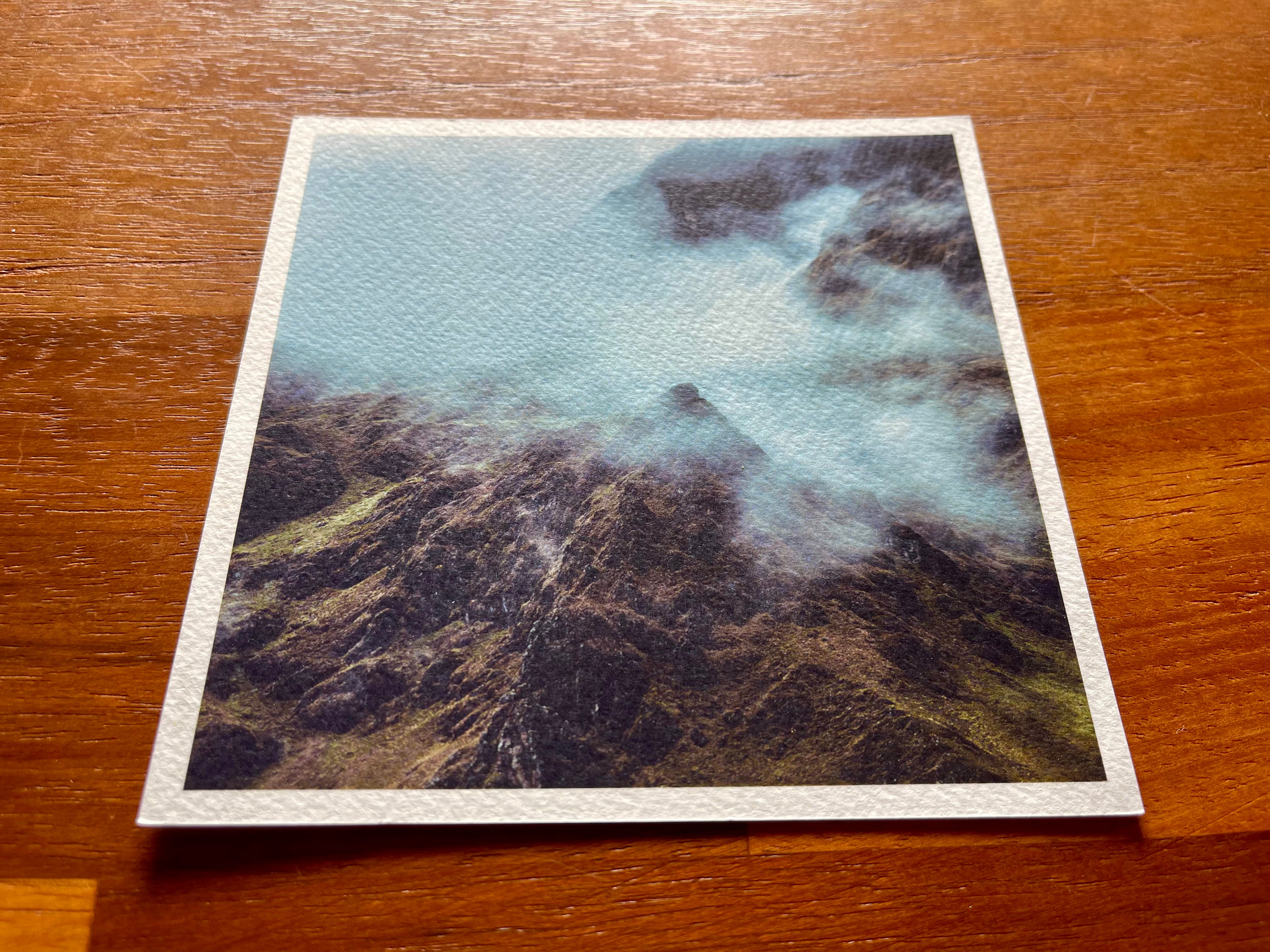
The front side of the sweet huatia card is a photo of the rugged, unforgiving landscape that produces delightful food at the hands of the talented producers in Peru.
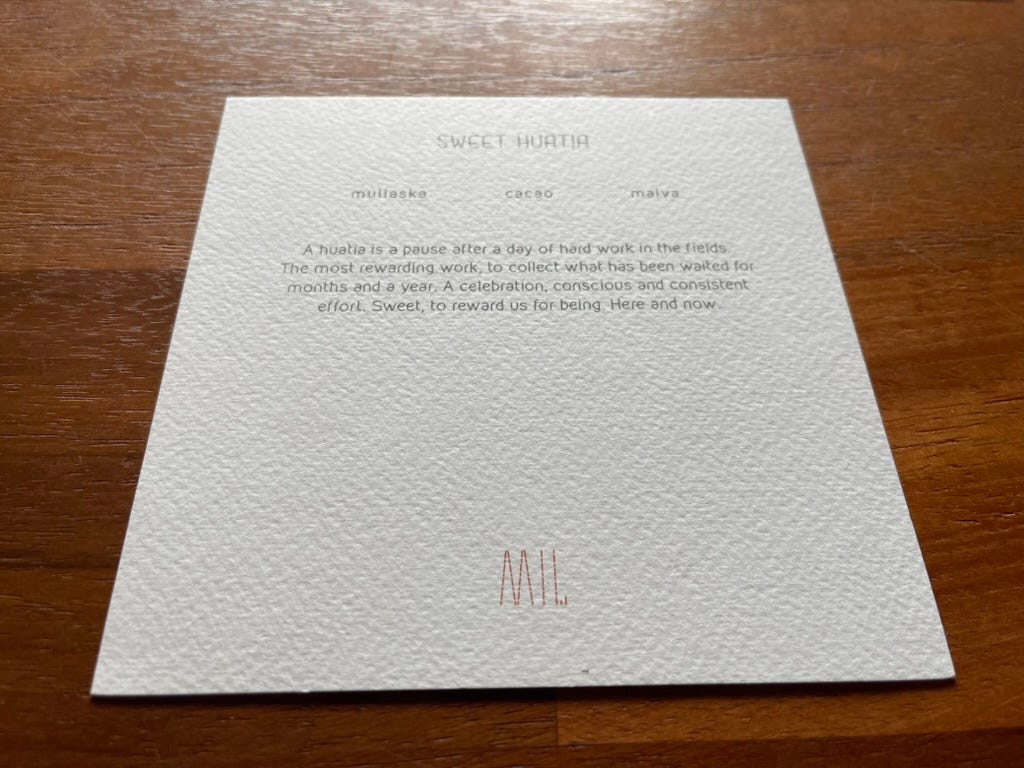
“A huatia is a pause after a day of hard work in the fields. Sweet, to reward us for being. Here and now.”
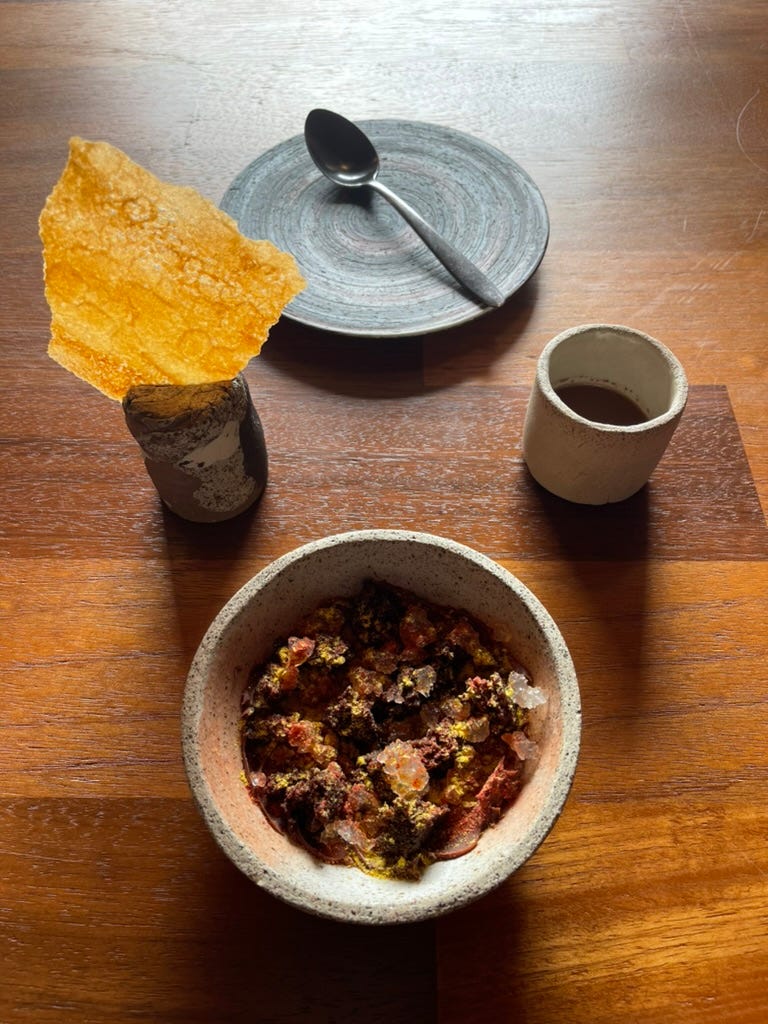
The final course arrives in pieces: a bowl, a crisp, a cup, a spoon. Cacao, mullaska, malva. Each meant to be eaten slowly.
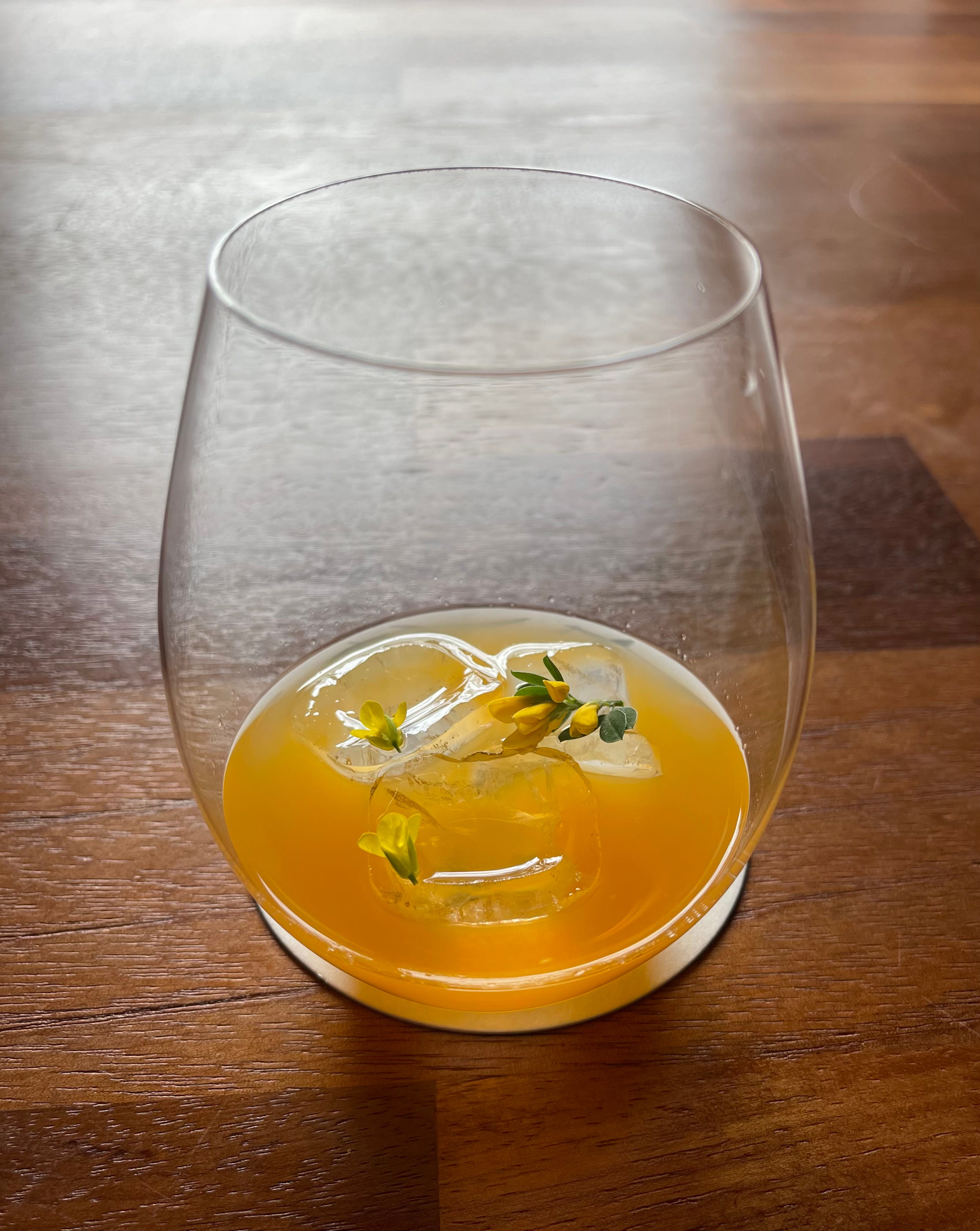
The meal ends here. A golden infusion, two small flowers floating. Quiet. Contemplative.
Designing Impact explores what it takes to create impact that cascades beyond the people who started it. Read the full article: Centuries in Every Course: Designing Impact That Lasts