

I wrote this last year after climbing Mount Whitney. It's the experience that clarified something I'd been circling for a long time: what separates intentions that become real from the ones that fade.
Breakthroughs begin when people see a peak others consider impossible, transforming entropy into action.
After over two decades leading design teams and innovation at companies like Amazon, Google, Meta, PayPal, SoFi, and early-stage startups, I took a purposeful pause to reflect, research, and set my sights on new peaks — starting with summiting Mount Whitney in a day.
My journey to Mount Whitney became a design challenge that brought together planning, training, continuous learning, and determination in service of a broader purpose.

At 14,505 feet, Mount Whitney stands as the highest peak in the contiguous United States. Climbing Whitney isn’t just a hike — it’s a beauty and beast of a 22-mile endurance adventure with 6,600 feet of elevation gain on knife-edge granite trails where thin air demands both scanning the horizon for conditions and precision in every movement.
What I didn’t expect was how the journey — from initial planning through months of preparation to the final ascent — would parallel design leadership: setting vision, teamwork, navigating ambiguity, solving hard problems, and finding flow when the trail disappears.
As Mike Davidson, VP of Design for Microsoft AI, puts it: “The air can be thin at times for a designer, but that’s how we train our minds and bodies to be resilient, creative, and unorthodox.”
Here are five insights that Mount Whitney reinforced — apparently I can’t climb a mountain without turning it into a design opportunity. These insights are forged by granite and pixels, steep switchbacks and user research, summits and product launches.
1. Design a North Star to Light Your Path
“Design is a plan for arranging elements in such a way as best to accomplish a particular purpose.” — Charles Eames
At Whitney Portal in the darkness at 1:30am, my headlamp barely illuminated the trail to the summit ahead. But I wasn’t relying on what I could see — I was following a North Star I had crafted.
Setting my sights on Mount Whitney mirrored how I’ve set direction throughout my career. Whether launching new ventures or aligning design teams, I’ve learned that effective North Stars don’t emerge naturally — they require intentional design through clear vision and unwavering principles.

My vision for Mount Whitney was straightforward: approach this challenge as part of lifelong discovery, where difficulty becomes a path to greater wisdom and resilience. This wasn’t about conquering a peak — it was about embracing growth through challenge and inspiring others to pursue their own transformative journeys.
The principles followed naturally: safety first, leave no trace, support the team, focus on learning over ego, and strive to be present in each moment. These weren’t aspirational concepts but practical boundaries that would guide decisions and action, much like the foundational values that anchor successful companies and design organizations.
Jim Collins, author of “Good to Great,” discovered that enduring companies master a similar process — they deliberately define a bold future vision alongside unchanging core ideology. Having applied Collins’ framework when building teams, setting organizational culture, and creating new products, I understood that the intersection of these elements creates purpose that sustains performance through difficulty.
This adaptive visioning approach — maintaining clear long-term direction while scanning the horizon for changing conditions — proves essential when leading organizations through market volatility and technological disruption.
Research consistently demonstrates the power of purpose-driven organizations: research published in the Harvard Business Review shows that more than 90% of companies with a well-defined purpose deliver growth and profits at or above industry average, while Gallup research reveals that purpose-driven organizations attract both talent and customers more effectively. But purpose must be designed, not discovered. The process of defining clear vision and principles creates the clarity that makes difficulty meaningful — whether you’re shipping products or summiting peaks.
The elements of my Whitney journey were arranged around my purpose. Every constraint became a creative challenge because I had a North Star that gave obstacles both meaning and direction.
But having a North Star only gets you started. The real test comes when the trail disappears and you must navigate forward with incomplete information.
2. Blaze Trails Through Ambiguity
“Don’t be afraid to expand yourself, to step out of your comfort zone. That is where the joy and adventure lie.” — Herbie Hancock
Whitney reflects a key innovation challenge: venturing beyond comfort zones with incomplete information and transforming uncertainty into competitive advantage. Despite well-marked trails, the journey to the summit demands constant adaptation to risks no planning can eliminate.
When I’ve launched new ventures or created breakthrough approaches, the early stages felt similar — moving forward with conviction despite limited visibility, knowing that healthy skepticism from others often sharpens the vision. Innovation leaders must develop comfort with ambiguity and the temporary isolation that comes from pursuing possibilities that others don’t yet see, while remaining prepared to adapt in dynamic, fast-moving businesses.

Whitney’s challenges echo what often makes innovation demanding, highlighting the courage it takes to step into unfamiliar territory. While technical problems are more tractable with defined solutions, it is the adaptive challenges that require learning and behavioral change.
Here are three specific challenges that reflect this:
The Endurance Challenge: Hiking over 22 miles with nearly 7,000 feet of climbing at altitude with 25-pound packs creates unique demands. My background competing in sports like soccer, football and basketball built fast-twitch fibers optimized for explosive power, but endurance requires slow-twitch adaptations for what endurance athletes call ‘time on feet’ — where success is measured in hours of sustained effort rather than bursts of speed, adaptations that take months to develop.

Similarly, design leadership builds different muscle memory on top of execution expertise — simultaneously exercising big-picture thinking and detail-oriented craft, long-term strategy and immediate solutions. The adaptive behavior required is learning to maintain steady, consistent effort over extended periods rather than trying to sustain maximum intensity continuously.
The Oxygen Cliff: At 14,505 feet, partial pressure of oxygen is approximately 40% lower than sea level due to decreased barometric pressure — creating what’s called “hypobaric hypoxia.” It’s like breathing through a straw. Acute Mountain Sickness compounds this challenge, typically occurring above 8,000 feet and affecting about 20% of people who rapidly ascend to this altitude (40% above 10,000 feet). This cognitive impairment can cause life-threatening disorientation when decision-making becomes critical on narrow trails with thousand-foot drops.

Design leaders often work in similarly demanding environments: resource constraints, unclear user needs, disruptive technologies, and shifting market conditions that demand efficient thinking under pressure. The adaptive behavior is developing efficient decision-making frameworks that preserve good judgment under pressure.
The Fear Factor: Whitney’s 99 switchbacks and narrow trails feature thousand-foot drop-offs that can trigger intense fear responses. This physiological fear response — increased heart rate, tunnel vision, compromised judgment — creates a technical challenge that requires behavioral adaptation: learning to make sound decisions while your body actively works against rational thinking. While I’ve hung from an airplane wing and let go thousands of feet in the air, just watching videos of Mount Whitney’s narrow trails tested my courage before I stepped on the trail.
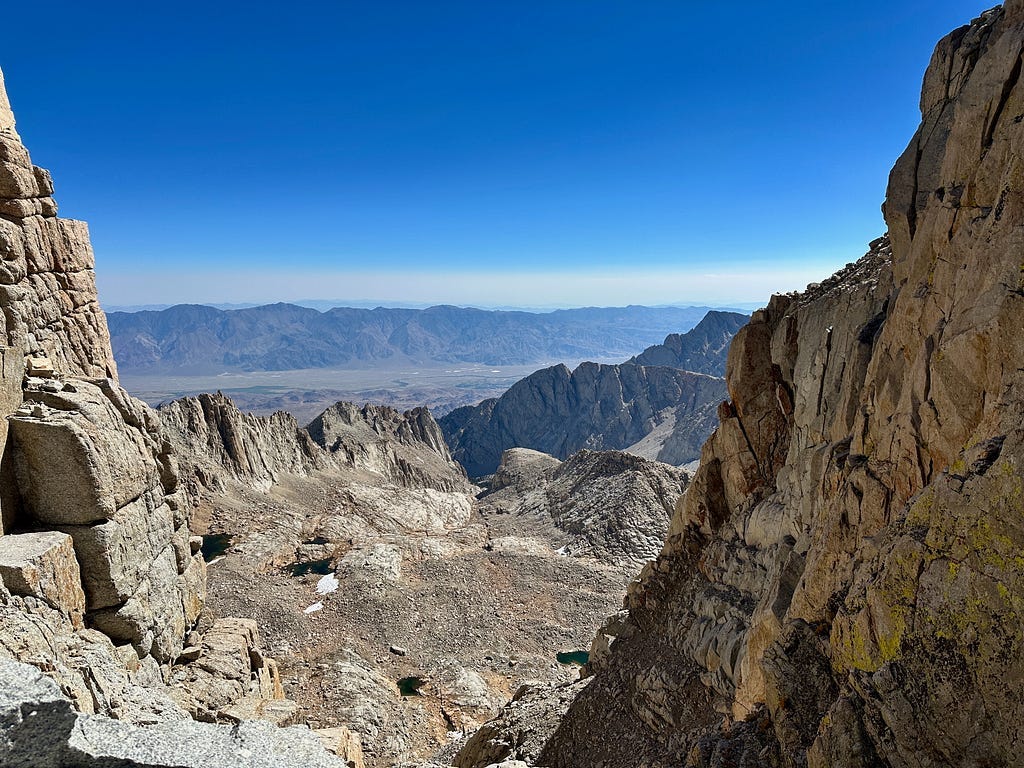
Innovation demands similar comfort with discomfort — launching products before they feel ready, making decisions without complete data, leading teams through uncertainty. The adaptive behavior is developing emotional intelligence (EQ) skills that preserve clear thinking during high-pressure decision-making moments.
Ronald Heifetz, in “The Practice of Adaptive Leadership”, describes the “productive zone of disequilibrium” — maintaining enough challenge to motivate growth without creating overwhelming stress that shuts down learning. Effective innovation leaders help teams stay in this zone, recognizing when members approach tolerance limits and providing support to gradually expand everyone’s adaptive capacity.
Each Whitney challenge reminded me that you can’t eliminate ambiguity, but you can develop the skills and confidence to navigate it successfully and experience joy through the adventure.
3. Seek People Who Elevate the Team
“If you are the smartest person in the room, then you are in the wrong room.” — Confucius
Throughout my career, I’ve been fortunate to hire and support brilliant designers, researchers, and program managers while partnering with visionary CEOs, talented design leaders, innovative entrepreneurs, world class engineers, and gifted product leaders. Working alongside people whose expertise constantly challenges and expands my thinking has been one of the greatest accelerators of my professional growth.
This principle came alive during my Whitney journey, where I sought out co-explorers who would challenge my abilities. With Whitney permits awarded to only 25–30% of the 50,000+ annual applicants and only 100 day hikers a day, securing a permit for our date felt like winning the lottery.
I was lucky to form a team with a group of friends where I was clearly the “runt of the litter” in terms of endurance training. And, approaching the adventure with a “beginner’s mind” was exactly where I needed to be.
Pat hikes in the Rocky Mountains where he devours “14ers” for breakfast. Erik competes in 30-mile Spartan races with diabolical obstacle courses. Brandon was a collegiate cross-country runner who swims miles in San Francisco Bay’s frigid waters for fun. Joe has completed dozens of ultramarathons, including the Leadville 100 — a 100 mile race that climbs over 12,000 feet at elevations between 9,200 and 12,600 feet.
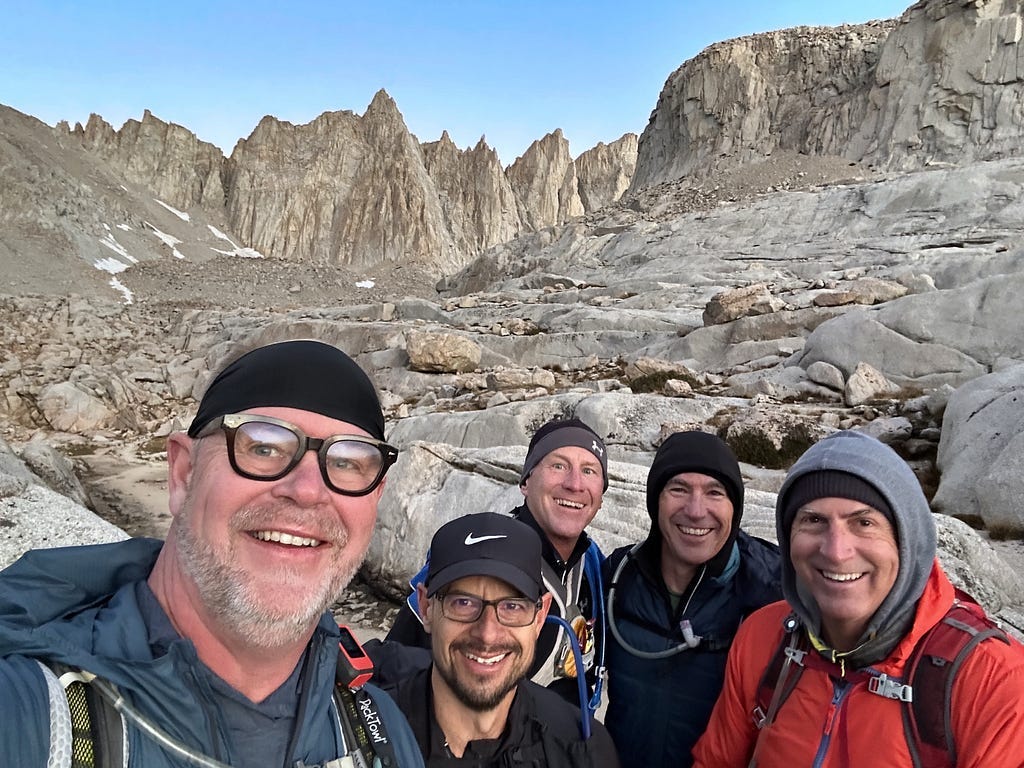
More importantly, each brought diverse perspectives alongside shared qualities of curiosity, creativity, trust, and commitment to collective success. Combined, this meant that each team member demonstrated high care and high accountability, creating what Amy Edmondson describes in “The Fearless Organization” as the foundation of high-performing teams: psychological safety paired with rigorous standards.
Google’s Project Aristotle, which analyzed 180 teams, confirmed that psychological safety was the strongest predictor of team effectiveness, with high-performing teams showing 32% faster project completion and 41% more new ideas. In an alpine adventure with real risks, these strengths proved as valuable as physical conditioning.
Warren Buffett captures this perfectly: “It’s better to hang out with people better than you. Pick out associates whose behavior is better than yours and you’ll drift in that direction.”
This reflects combining everyone’s strengths in action — where collective intelligence emerges when teams naturally work well together rather than through top-down control, creating competitive advantage through diverse expertise working in concert.
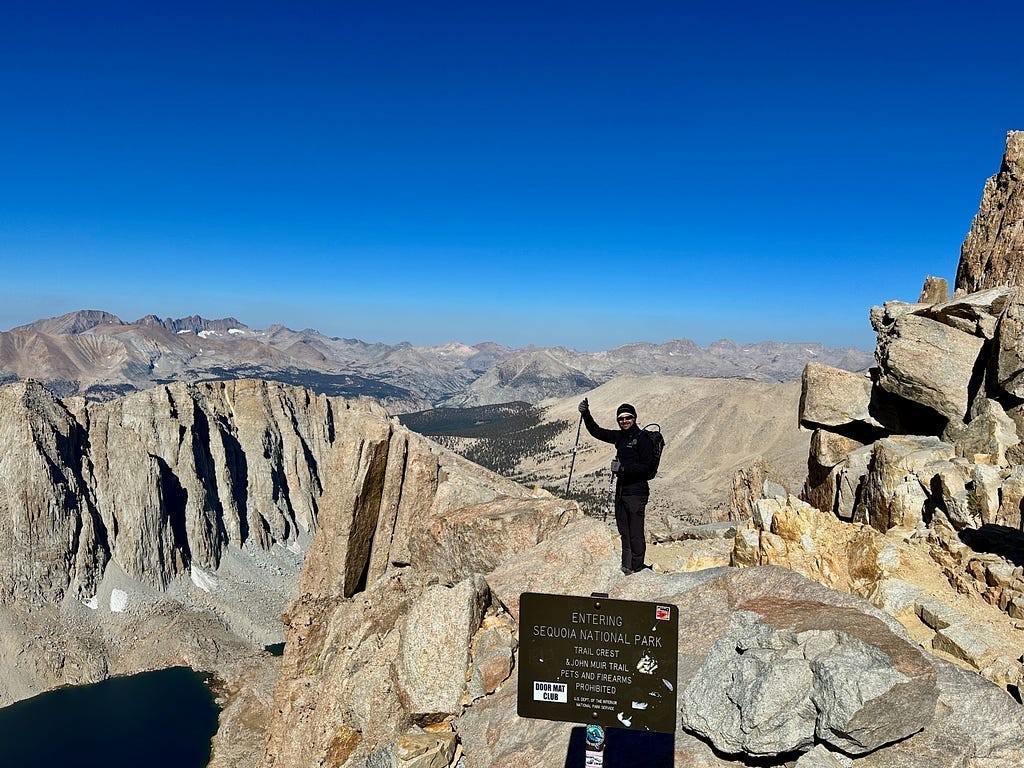
The camaraderie of planning and collaboration became its own source of joy — each person’s expertise elevating the entire team through mutual accountability and shared ownership. My contributions included a design perspective: research, problem solving, ideation, deliberate preparation, iterative learning from training hikes.
The experience reminded me that leadership strength often comes not from being the smartest person in the room, but from orchestrating expertise in service of shared vision — whether reaching an iconic summit or creating products that transform millions of lives.
4. Execute Your Vision Step by Step
“Ideas are worth nothing unless executed. They are just a multiplier. Execution is worth millions.” — Steve Jobs
Vision creates purpose, but execution delivers results. In innovation, this dual rhythm is critical: strong teams master both bold experimentation and incremental progress through rapid iteration and continuous improvement.
Execution demands experimentation — and experimentation requires failure. When you’re building something new, you rarely have a complete playbook to follow. Amy Edmondson’s research in “Right Kind of Wrong: The Science of Failing Well" on ‘intelligent failures’ reveals why this uncertainty is actually valuable — thoughtful experiments in unknown territory provide insights that couldn’t be gained any other way.
Research from MIT Sloan Management Review confirms that venture-backed companies backed by failure-tolerant investors are significantly more innovative, with early-stage failure tolerance being particularly crucial for innovation culture.
Whether you’re executing a business strategy or climbing Mount Whitney, the principle remains the same: breakthrough performance requires the discipline to treat setbacks as data points, not verdicts.
Turning setbacks into stepping stones: Ninety days before our planned ascent, an unexpected injury sustained during a routine training hike on Mount Tamalpais required surgery and threatened to make Whitney impossible. When I asked my surgeon about my timeline to simultaneously recover and train, his hesitant “It’s…possible” response revealed everything about the gap between possibility and probability.
Two weeks post-surgery, I laced up my boots and returned to the trails determined to close that gap. My injury 90 days before Whitney exemplified Edmondson’s research: rather than viewing it as a basic failure, I treated it as an intelligent failure that revealed preparation gaps and forced innovative training adaptations.
The key was treating setbacks as data rather than judgment — each limitation revealed insights about preparation gaps and threshold points, just like user research reveals critical insights about real customer needs.
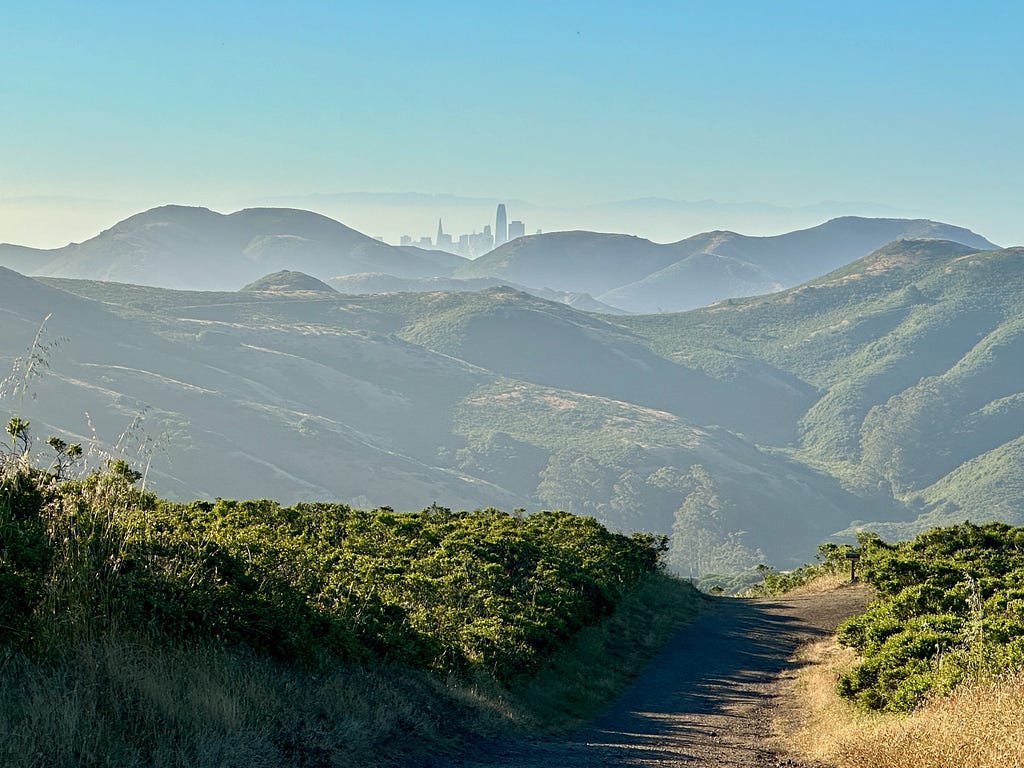
The setback required a methodical approach with limited time: research recovery protocols, prototype different training methods, and test approaches adapted to my specific constraints — all while uncertain how my body would heal and respond to intense training in parallel.
The approach felt like design methodology in action — research, prototype, test, iterate. “Training for the New Alpinism: A Manual for the Climber as Athlete” by Steve House became my guide, teaching ways to apply sports science to mountaineering. I focused my training not only on physical endurance but also on mental fortitude. House’s key insight resonated deeply: “When you are training, you are not just training your body, but also, maybe even primarily, training your mind.”
The iterative approach builds adaptability that transforms setbacks into intelligence about what’s possible. My plan progressed through three phases designed to build performance while keeping the team updated on my progress. I integrated weekly strength and core training for power development, hill sprints for cardiovascular conditioning, and technical skills practice alongside a structured plan for hiking progression:
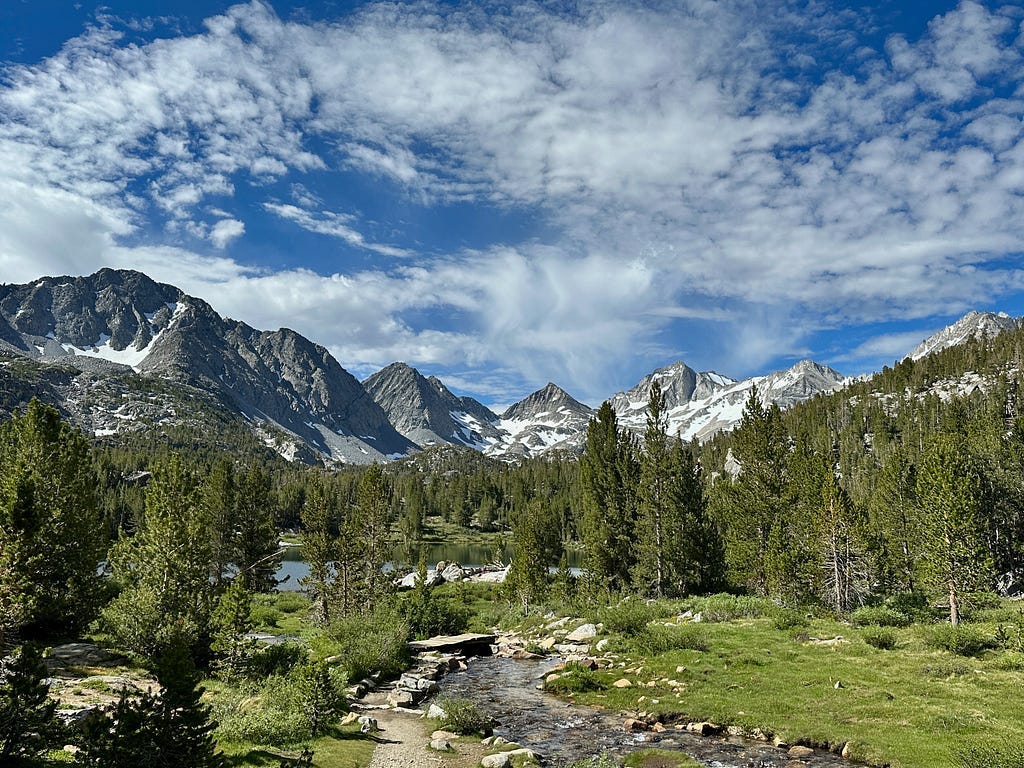
Phase 1: Rebuild Foundation (0–30 days) — Local and alpine hikes focused on basic capacity, testing preparation approaches, establishing sustainable rhythms with hikes varying from 3 to 12 miles and 3,000 ft of elevation gain. Equipment failures and weather fluctuations taught valuable lessons about backup planning. Like early product development: proving core concepts work before scaling complexity.
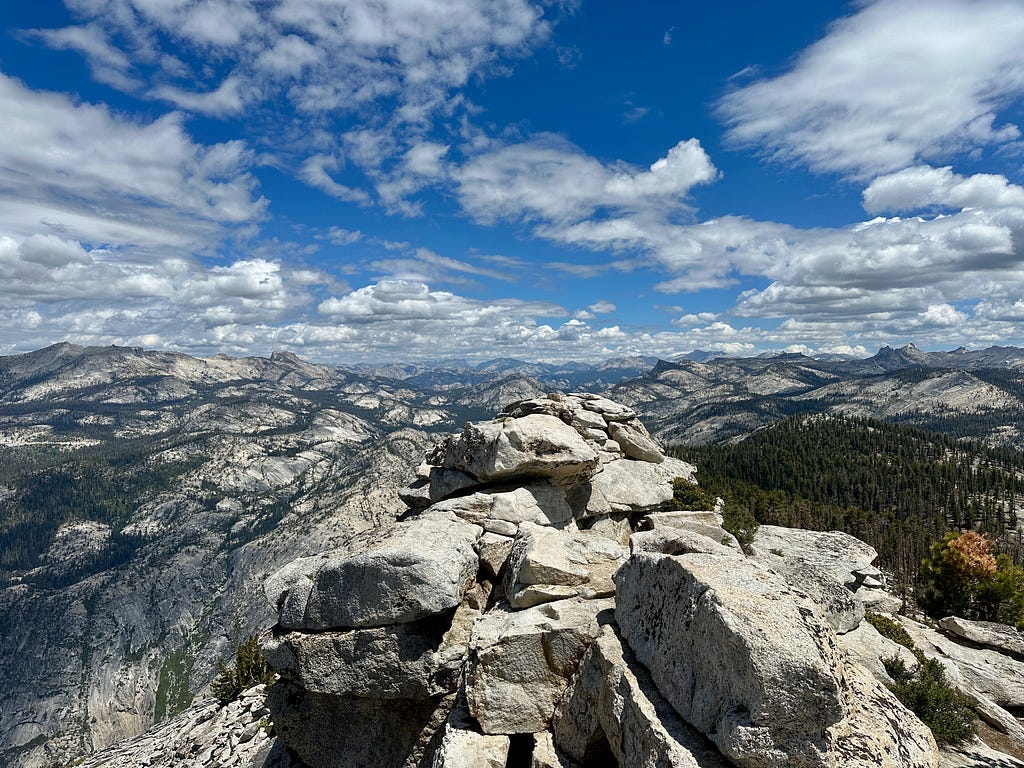
Phase 2: Extend Capacity (30–60 days) — Cloud’s Rest (12 miles, 2,800ft gain, 9,926 feet elevation) with significant exposure at the summit, Flattop Summit in Colorado (13 miles, 2,874ft gain, 12,239ft elevation) with the team, and Mount Tallac (9.6 miles, 3,284ft gain, 9,734ft elevation) with the team. Each hike served as both training and testing — revealing what worked, what needed adjustment. Similar to design sprints and experimentation: rapid cycles of building, testing, learning.
Phase 3: Peak Preparation (60–90 days) — South Sister in Oregon (14 miles, 5,039ft gain, 10,358ft elevation), Mount Elbert in Colorado (17 miles, 5,800ft gain, 14,440ft elevation) with the team, plus Whitney acclimatization hikes. The breakthrough came through steady execution of progressive challenges — each building methodically on the previous one.
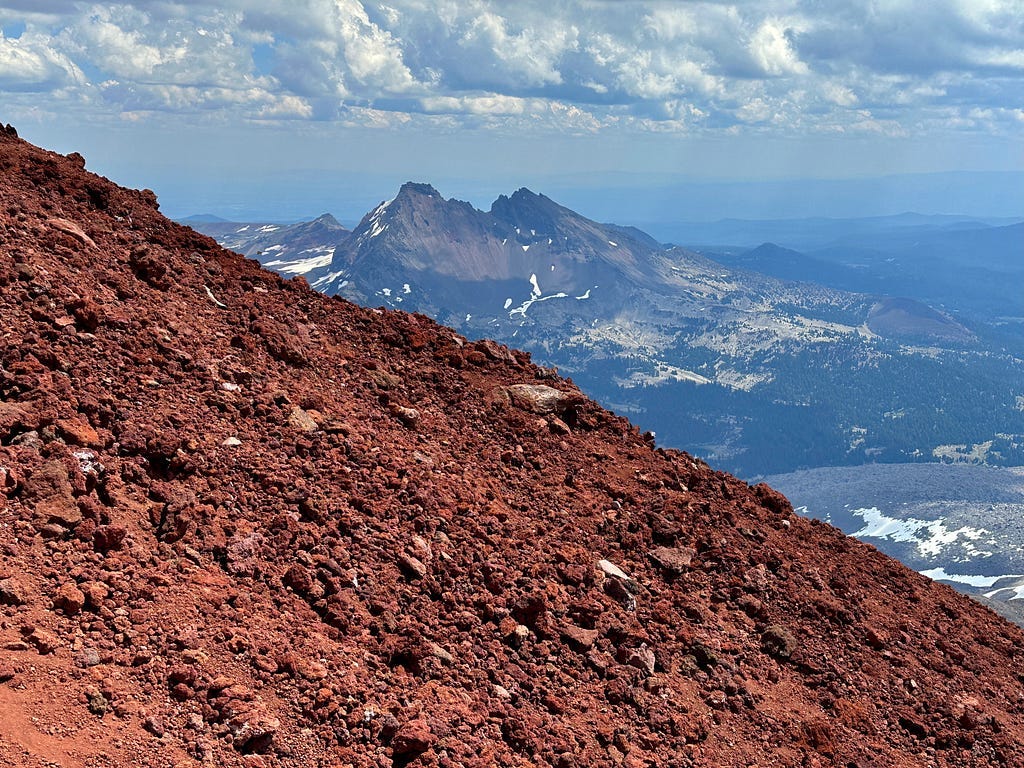
Each hike was its own gift of discovery spanning trails in Marin County, Central California, Sierra Nevada, Yosemite, Three Sisters Wilderness, and the Rockies.
Cloud’s Rest offered panoramic Yosemite views from 1,000 feet above Half Dome along its exposed “spine.” Mount Tallac demanded route-finding through chaotic boulder fields where trails disappeared among glacial moraine. South Sister’s final “red mile” climbed 1,400 feet through loose volcanic scree to Oregon’s highest glacial lake testing balance and fortitude. Mount Elbert provided a gentle introduction to Colorado’s 14ers with 17 miles and 5,800 feet of climbing into thin air.
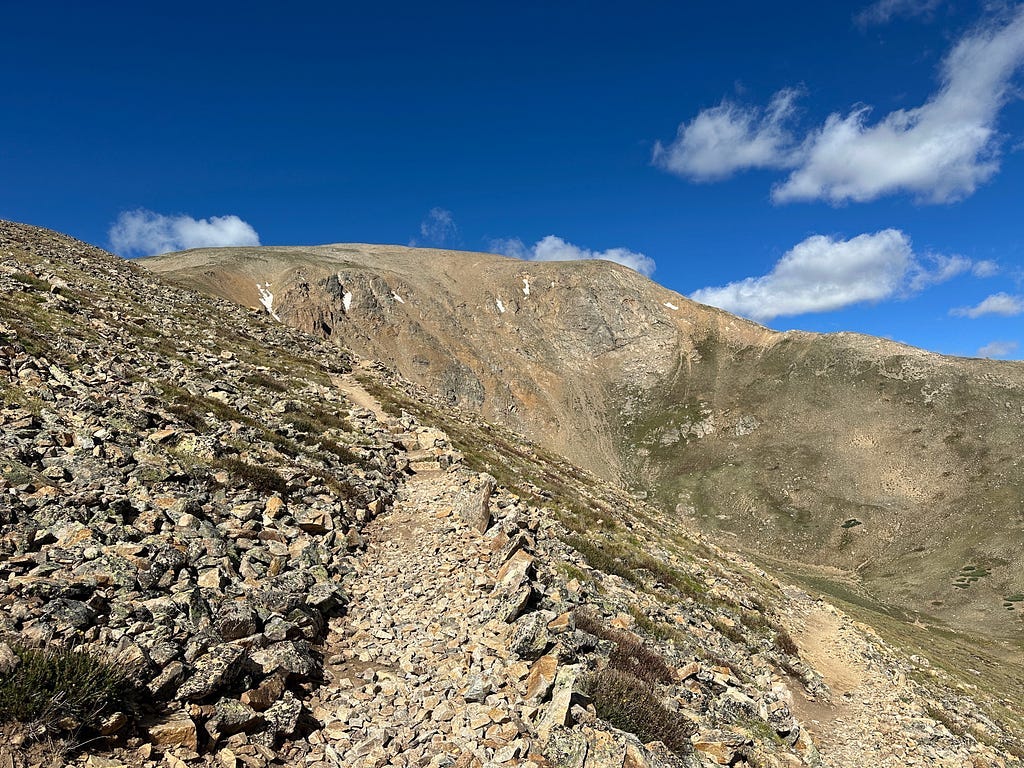
The incremental gains from each outing compounded into transformed capabilities. By departure time, Whitney no longer felt like distant vision but destination within reach through disciplined execution.
Steve Jobs understood that ideas without execution are worthless — execution is the multiplier that transforms possibility into reality. Whitney reminded me that execution isn’t just about big leaps; it’s about the patient accumulation of small steps that can compound into extraordinary capability.
5. Find Joy in the Ascent, Not Just the Summit
“The process of growth is more important than the achievement of any single goal.” — Carol Dweck
Innovation breakthroughs rarely arrive in the first version — they often emerge during the iterative grind when you’re sketching the hundredth variation, conducting the fifteenth user interview, debugging interaction models that initially seemed perfect.
When we stay curious about each step, every project becomes a discovery about users, craft, and our own capabilities.
I felt confident approaching summit day. Pat, Brandon, Erik, Joe, and I departed our hotel near midnight, beginning our ascent at 1:30am with temperatures just above freezing but clear skies forecasted.
Ascending Through Darkness: The team nominated me as pathfinder as we set off, seeing only 5–10 feet ahead through headlamp beams. Setting the pace was challenging — balancing speed against my heart rate with the goal of staying under 60–70% of my max heart rate (Zone 2) to ensure endurance.
Two hours in, I physically felt the altitude change of the thinning air, pace demands, and my 25-pound pack weight. The slow-twitch endurance adaptations I’d built over months of training were now being tested — this was exactly the ‘time on feet’ challenge I’d prepared for.
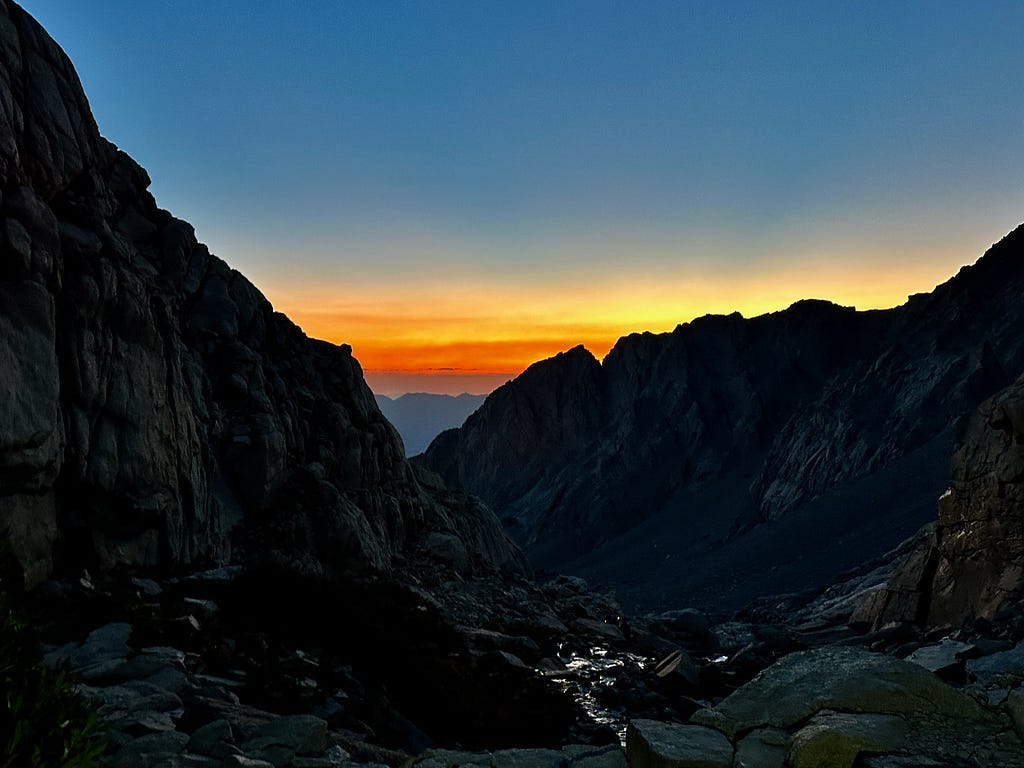
It was strange and beautiful hiking up alpine terrain with no sense of surroundings. Our limited vision powerfully amplified the sounds — wind sweeping through trees and canyon, rushing water suggesting a spectacular but invisible landscape of cliffs rising high above and dropping hundreds of feet below the narrow trail.
The Uncomfortable Zen of 99 Switchbacks: Reaching Trail Camp at 12,000 feet, we greeted the rising sun casting reddish glow illuminating the stark beauty of rugged peaks above us. The 99 switchbacks — constructed in 1904 — represent impressive trail engineering and psychological battle against narrow winding paths, loose rock, and thin air that leaves many gasping above 13,000 feet.
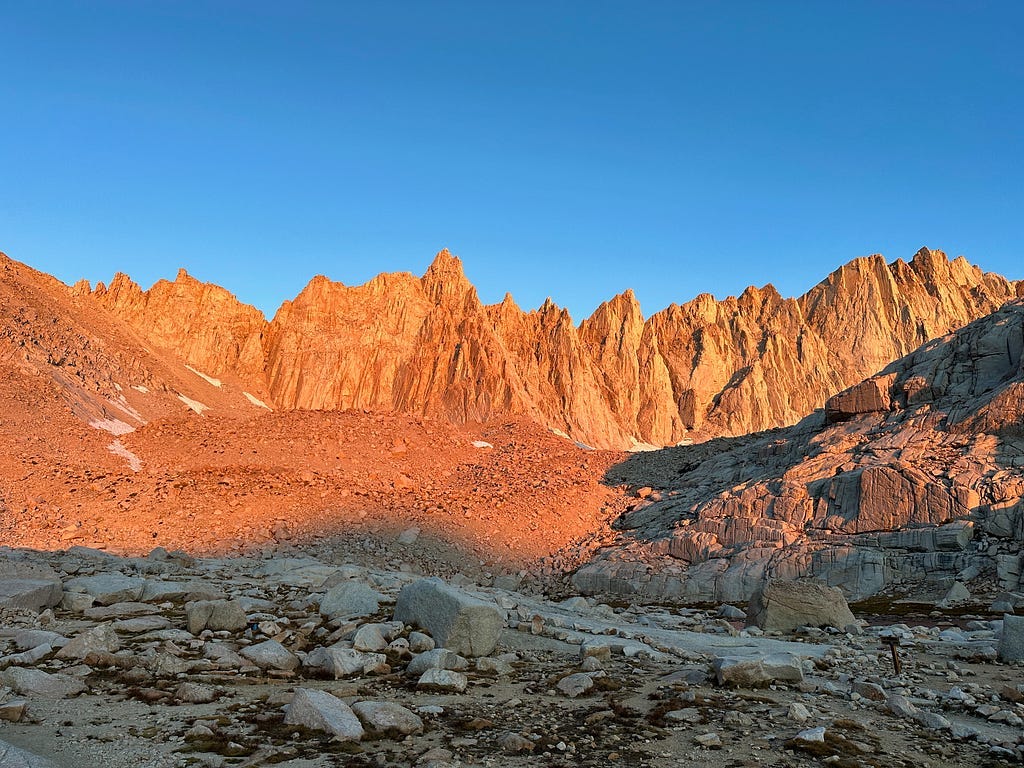
At 13,000+ feet, the hypobaric hypoxia became real — that 40% oxygen reduction forcing deliberate, measured breathing. The simplified decision-making frameworks I’d developed proved essential as mental clarity required more effort with every step upward.
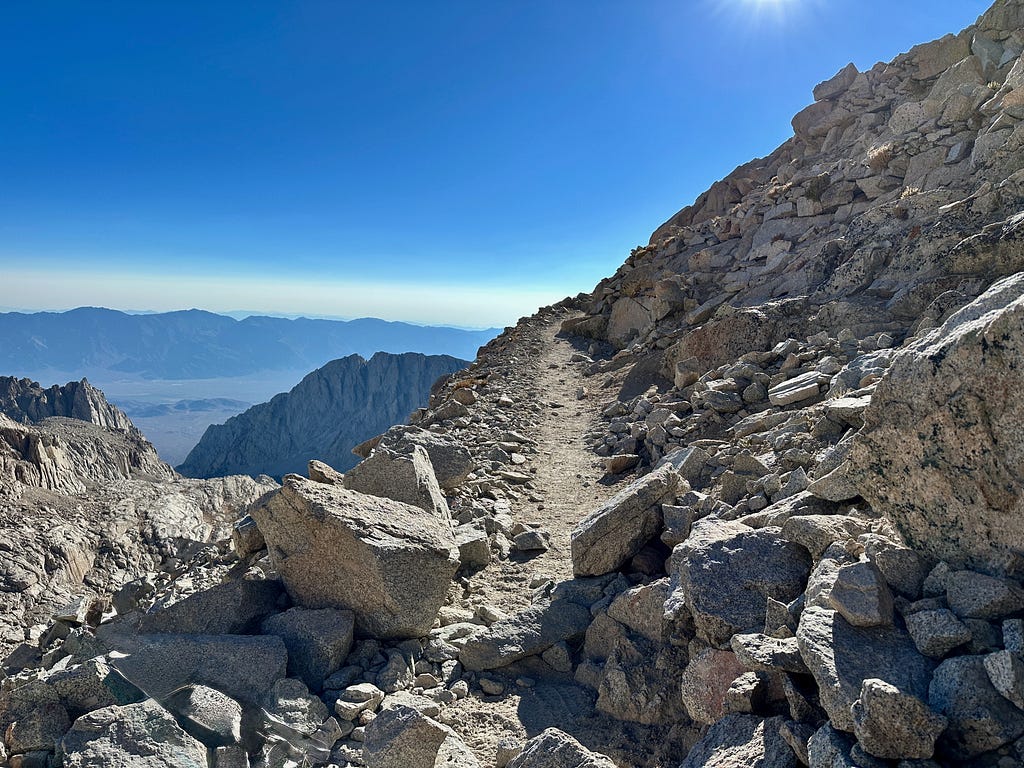
I experienced both the maddening repetition that defeats many hikers and moments of shinrin-yoku (“forest bathing”) — raw granite beauty and rhythmic progression providing reflection and awe in the surreal elevation drops and granite giants around us.
Trail Crest to Summit: The final push from Trail Crest at 13,700 feet includes a cruel twist — after climbing nearly 6,000 feet, the trail drops 200 feet where it connects with the John Muir Trail before the last ascent.
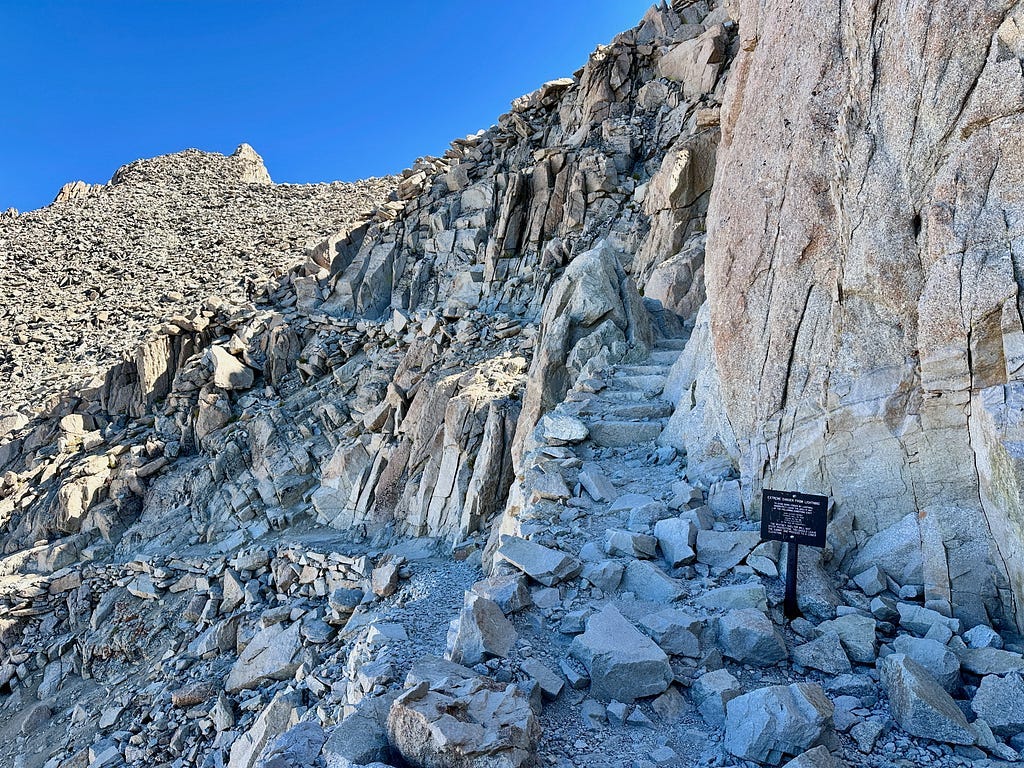
This counterintuitive descent feels like a step backwards after hard-won progress, but ushers in a landscape transformation. Gone are eastern Sierra’s familiar granite faces; instead, you navigate narrow ledges carved into the western face with sweeping views into Sequoia National Park thousands of feet below.
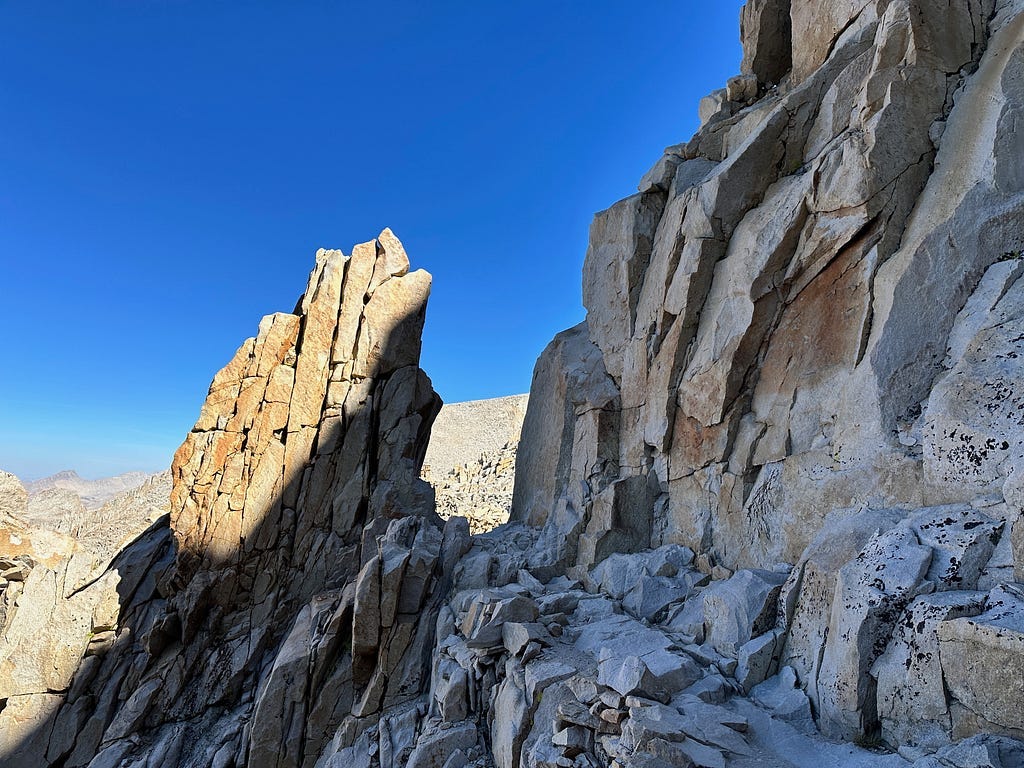
The route weaves between massive granite boulders through a maze demanding complete attention, yet constantly rewarded by breathtaking compositions of stone, sky, and infinite space. Even as thousand-foot drops triggered intense physiological responses, staying present allowed me to appreciate the stunning beauty alongside the adrenaline.
Standing at 14,505 Feet: Whitney’s summit feels simultaneously monumental and humbling. The 360-degree views encompass the entire eastern Sierra, Owens Valley stretching endlessly east, jagged Sierra Nevada peaks extending north and south like granite spine. The clarity at this elevation is startling — mountain ranges layering upon mountain ranges to every horizon.
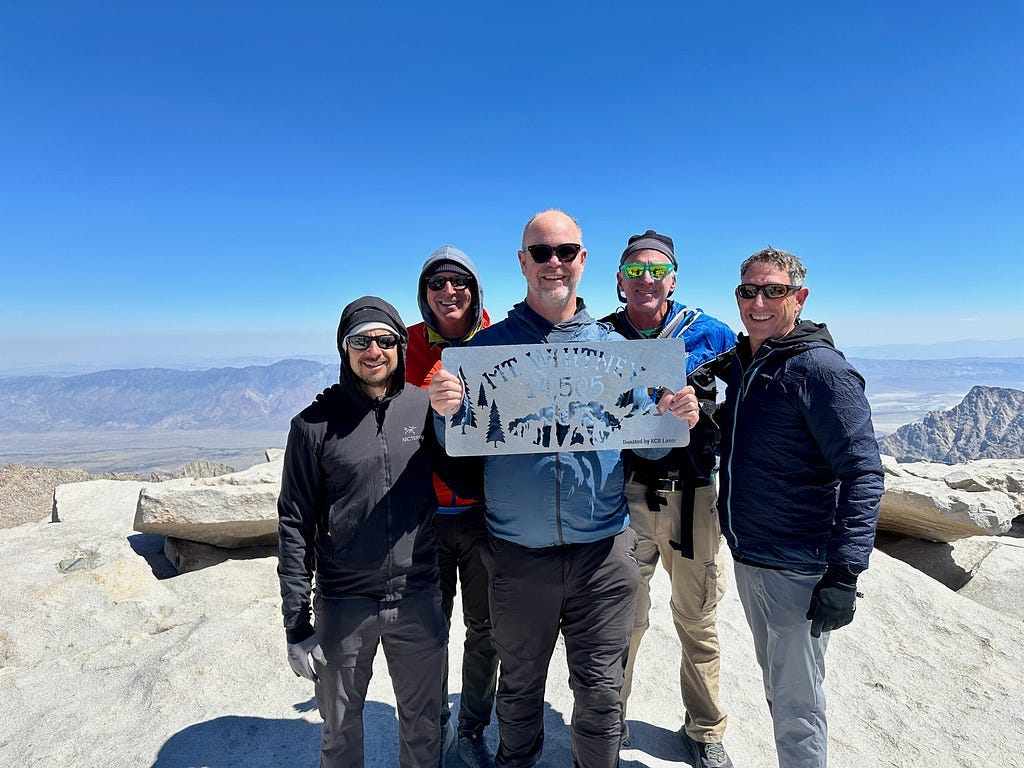
Surrounded by wonderful co-explorers, granite giants, and endless vistas, it was a moment of pure joy even though we were only half way through the hike.
The Descent: The journey down revealed gravity’s merciless challenge at altitude — what seemed difficult ascending became genuinely treacherous on exhausted legs with oxygen-starved minds. Each step demanded absolute focus; a moment’s inattention on loose scree or a mistimed placement could mean a devastating fall.
Yet even amid this intense vigilance and physical grind, the mountain continued its gifts as afternoon light transformed granite faces into warm gold, revealing the beautiful raw landscape that had been hidden in darkness just hours earlier.
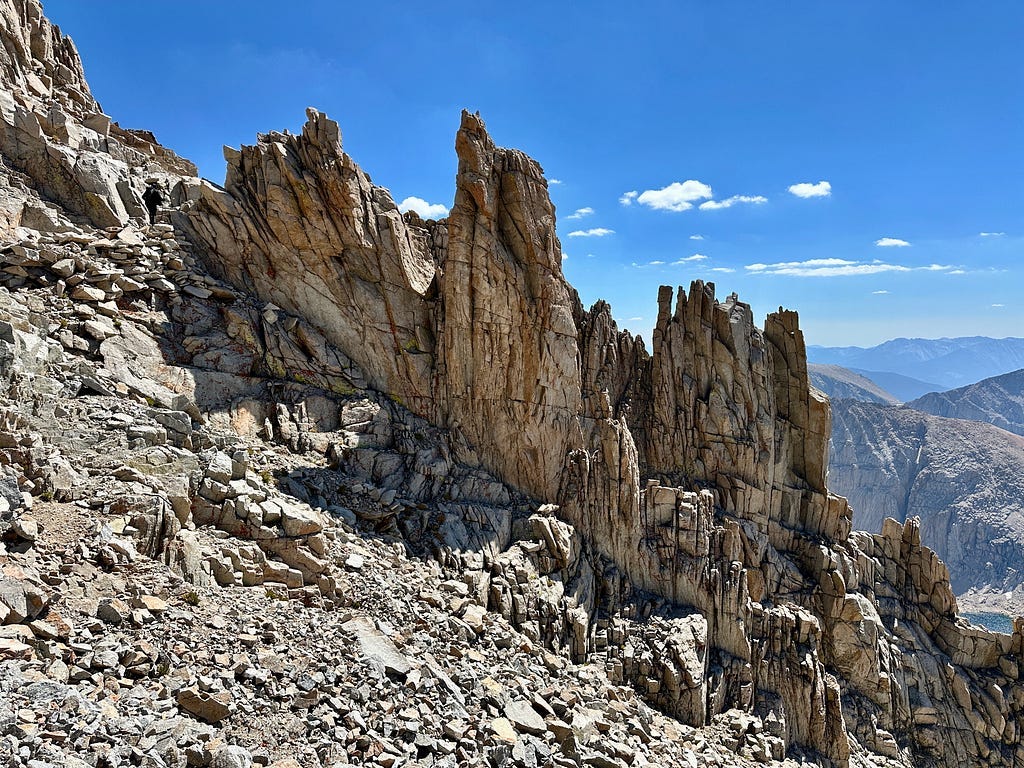
The vistas that were at our backs were now front and center, offering new perspectives about the trail. The canyons that we could only imagine in the darkness, sprung forward with the beauty of raw alpine wilderness.
When we reached Whitney Portal over 16 hours after departure, exhausted but exhilarated, the adventure had delivered a masterclass in transformation.
Dr. Carol Dweck’s insight about growth versus achievement felt true with every labored breath on the trail. The summit was profound, but the discovery happened throughout the entire journey, in moments when doubt transformed into determination.
Recent neuroscience research shows that a growth mindset actually changes how our brains work, with people who embrace challenges showing different neural patterns when facing difficult tasks. This isn’t just positive thinking — it’s rewiring your brain for resilience and learning.
Mount Whitney’s greatest gift wasn’t reaching its peak — it was showing how transformation happens through accumulated steps of commitment: how dreams take shape through preparation, how possibility becomes probable through grit and resilience, and how being fully present becomes joy when you find beauty in the journey itself.
These are the good tidings John Muir promised — not just the view from the summit, but the wisdom earned through every step of the ascent.
For design leaders, Whitney’s lessons translate directly: building products that didn’t exist before, creating transformative experiences, leading teams through uncertainty toward seemingly impossible breakthroughs. The mountain teaches that leadership isn’t about having all the answers — it’s about maintaining direction when the path is unclear, supporting others when conditions get tough, and finding joy in the climb itself, not just the destinations we reach.